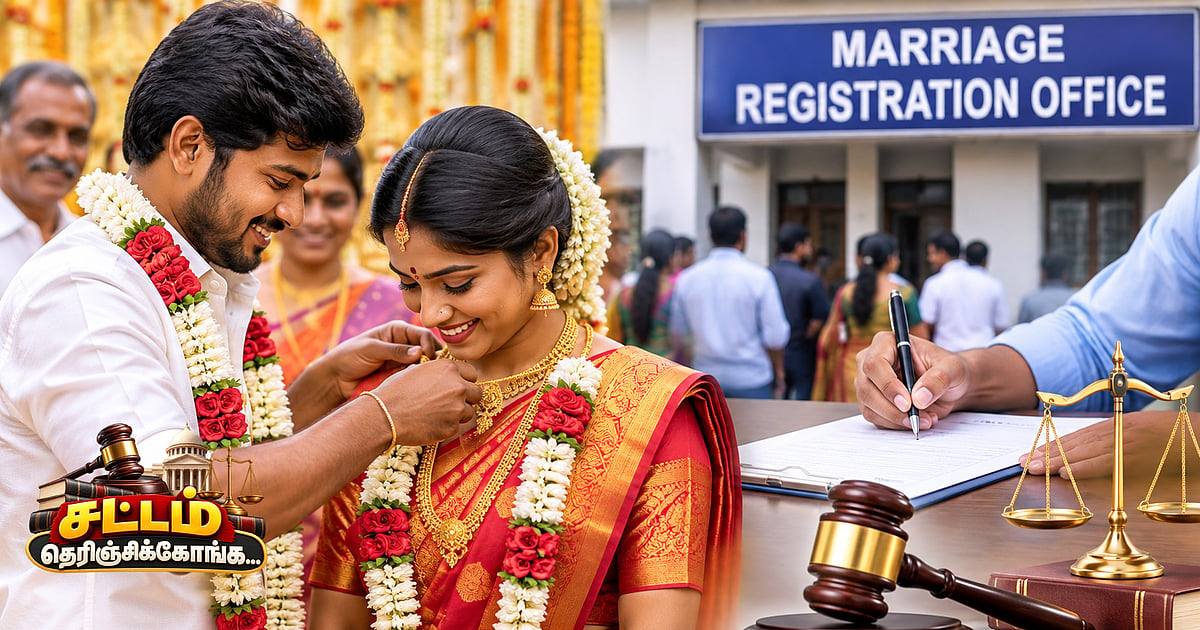
“We got married properly in front of our relatives. But, we didn’t register the marriage... will our marriage be legally valid now?”
There are many people who worry like this. Since the Tamil Nadu Registration of Marriages Act, 2009 came into force on 24.11.2009, all marriages taking place in Tamil Nadu must be registered under this Act as well, even if they have already been registered under the relevant religion or personal law.
Marriage does not automatically become invalid merely because it has not been registered. At the same time, why is it necessary to register a marriage? Within how much time should it be registered? What should be done if it is delayed?
Come, let’s see what the law says!
Is there one marriage law for everyone?
No! In India, marriages are governed by different personal laws. The Hindu Marriage Act, 1955 applies to marriages among Hindus, and the Indian Christian Marriage Act, 1872 applies to marriages among Christians. Muslim marriages are conducted according to the personal laws applicable to them. Regardless of religion, or even by people of the same religion if they wish, marriage can also be solemnized under the Special Marriage Act, 1954. However, in Tamil Nadu, marriages conducted from 24.11.2009 onward must also be registered under the Tamil Nadu Registration of Marriages Act, 2009.
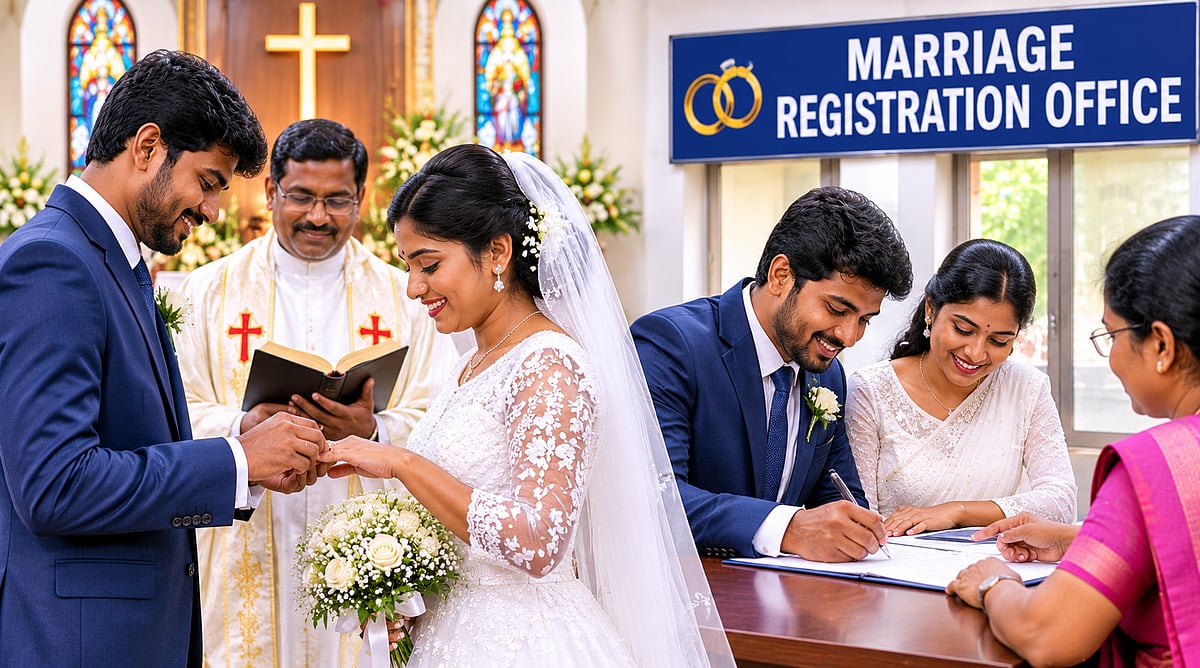
What are the conditions for marriage?
Under Section 5 of the Hindu Marriage Act, 1955, for a Hindu marriage to be valid, certain conditions must be fulfilled.
At the time of marriage, the groom must have completed 21 years of age and the bride must have completed 18 years of age.
At the time the marriage takes place, neither of the two should have another living husband or wife.
Both parties must be in a state of mind to consent to the marriage; the mental capacity requirements specified in the law must be satisfied.
Neither party should fall within the prohibited degrees of relationship or the Sapinda relationship; an exception applies if permission has been granted in the relevant case.
If these conditions are violated, the legal status of the marriage may vary depending on which condition has been breached. In some circumstances, the marriage may be void or may be annulled by the court.
Note: It cannot be said that a marriage automatically becomes void merely because the age requirement has been violated. Under the Prohibition of Child Marriage Act, 2006, in certain circumstances, it is possible to seek annulment of the marriage. Likewise, under Section 11 of the Hindu Marriage Act, if certain conditions are violated, the marriage may be void, and under Section 12, it may be voidable in certain circumstances.
Is marriage registration mandatory in Tamil Nadu?
Yes! Under Section 3 of the Tamil Nadu Registration of Marriages Act, 2009, every marriage solemnized in Tamil Nadu after this Act came into force must be registered. Even if the marriage has already been registered under the relevant religious rites or under a personal law, the obligation to register under Tamil Nadu law does not cease.
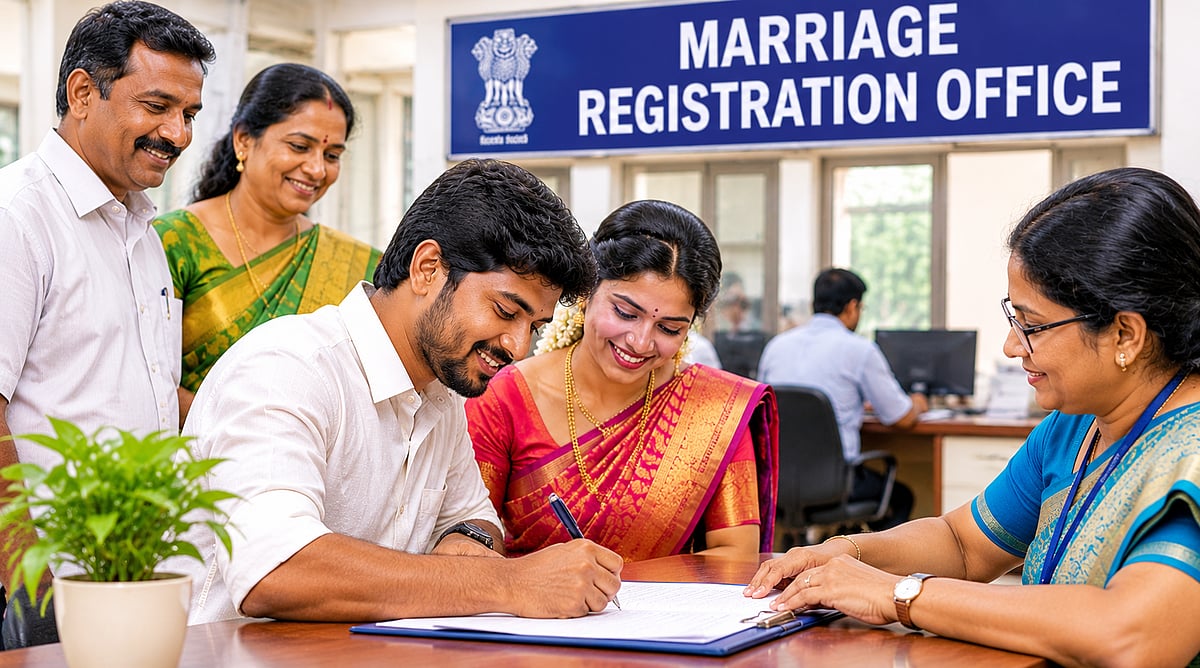
But there is an important point! Under Section 23 of this very law, the mere fact that a marriage is not registered under this Act does not make that marriage invalid. Likewise, simply because it has been registered, a marriage that is invalid under the applicable personal law does not become valid. The marriage must have been solemnized in accordance with the relevant law.
What is the benefit of registering a marriage?
Marriage registration is not just a government document. It also serves as important legal proof that a marriage has taken place. In the future, a marriage certificate will be useful when dealing with matters related to the rights of the husband or wife, maintenance, divorce, inheritance, and when obtaining passports, visas, and other government documents.
Under Section 11 of the Tamil Nadu Marriage Registration Act, a certified extract issued from the register may be accepted as proof that the marriage took place.
How to register?
Under Section 5 of the Tamil Nadu Registration of Marriages Act, 2009, marriage registration must be done with the Marriage Registrar having jurisdiction over the place where the marriage took place, or the registrar of the area where the bride or groom has permanent residence may also be approached. Registration cannot be done in another place based solely on the permanent residence of the bride or groom.
Generally, identity proof of the bride and groom, age proof, a wedding invitation or other proof that the marriage took place, identity proof of the witnesses, and the relevant application forms will be required. It is advisable to ask the registrar in advance and find out which documents are needed. In addition, details related to marriage registration can also be obtained through the official website of the Tamil Nadu government’s Registration Department, https://tnreginet.gov.in/.
What is the deadline? What if it is delayed?
Under Section 5 of the Tamil Nadu Registration of Marriages Act, 2009, an application must be made within 90 days from the date of marriage. After that, it can be applied for within the next 60 days with an additional fee.
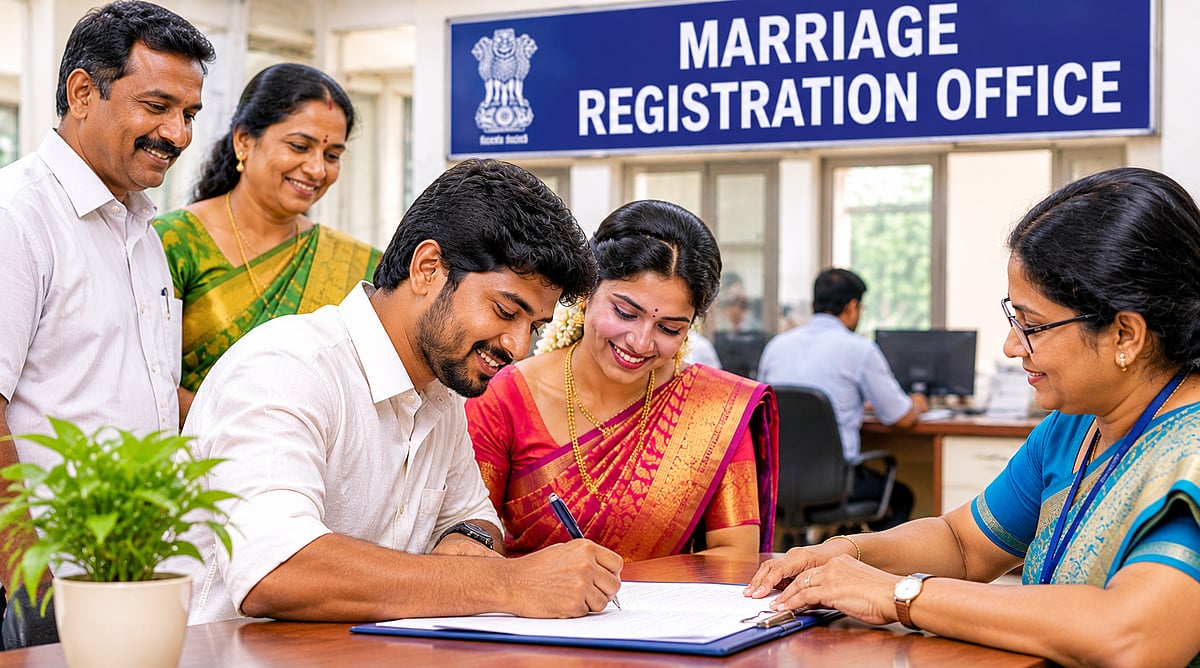
Even if 150 days have passed, there is still a way to register. According to the amendment made to the Tamil Nadu Marriage Registration Rules, there is a provision to pay an additional fee for applications made after 150 days. Therefore, those who were married many years ago can approach the registrar with the required documents and learn about the procedure.
If the marriage registrar rejects the application, the reasons for doing so must be stated in writing. Those affected by such an order may appeal to the District Registrar within 30 days of receiving the order, under Section 8 of the Tamil Nadu Marriage Registration Act. If there is sufficient cause, a delay of up to another 30 days may be condoned. The law also provides for an appeal to the Registrar-General under Section 9 against the District Registrar’s order.
What documents are required for marriage registration?
Before going to the registrar’s office, you should have the following documents (originals and copies) ready:
Wedding invitation, temple/hall receipt, proof that the marriage took place.
Age proof of the bride and groom (birth certificate, school certificate, or passport).
Address and identity proof of the bride and groom (Aadhaar card, voter ID card).
Joint photo taken during the marriage and passport-size photographs.
Identity proofs of three witnesses.
What if the marriage took place abroad or in another state?
Couples residing in Tamil Nadu, even if they have solemnized their marriage in foreign countries or in other states, may follow the procedures for registration under the Tamil Nadu Registration of Marriages Act, 2009, provided they are natives of Tamil Nadu or are permanently residing there.
For marriages conducted abroad, it is necessary to attach the Indian Embassy’s certificates along with the documents.
Note: The documents mentioned above are general. Since the required documents or additional proofs may vary according to the procedures of the Sub-Registrar Office (SRO) in your area, it is advisable to inquire and confirm with the concerned office before going.
Registering a marriage is not just about obtaining a certificate; it is an important step that will help prove your marital relationship in the future. If the marriage has not been registered, do not delay—approach the appropriate registrar without delay!