
In movies, we’ve seen a police officer threatening in a stern voice, “An FIR has been filed against you... no one can save you now!” Because of that, for many of us, FIR sounds like something huge that puts our very future into question.
But in reality, is FIR really such a frightening thing?
No! FIR (First Information Report) is not a punishment. It is the first piece of information received by the police regarding a crime. Based on that information, the next stage of investigation begins. Let’s look at this a little more simply!
Does filing an FIR automatically make someone a criminal?
First, throw away that misconception!
An FIR is not, by any means, a document that declares anyone guilty.
When the police receive information about an incident alleged to involve a cognizable offence, an FIR is registered on the basis of that information. In other words, an FIR does not mean that the “crime has been proven”; more importantly, the mere registration of an FIR does not make immediate arrest mandatory. Registering an FIR and making an arrest are two separate legal actions. It is only the first step toward the next stage of legal proceedings. There are also separate legal conditions for making an arrest.
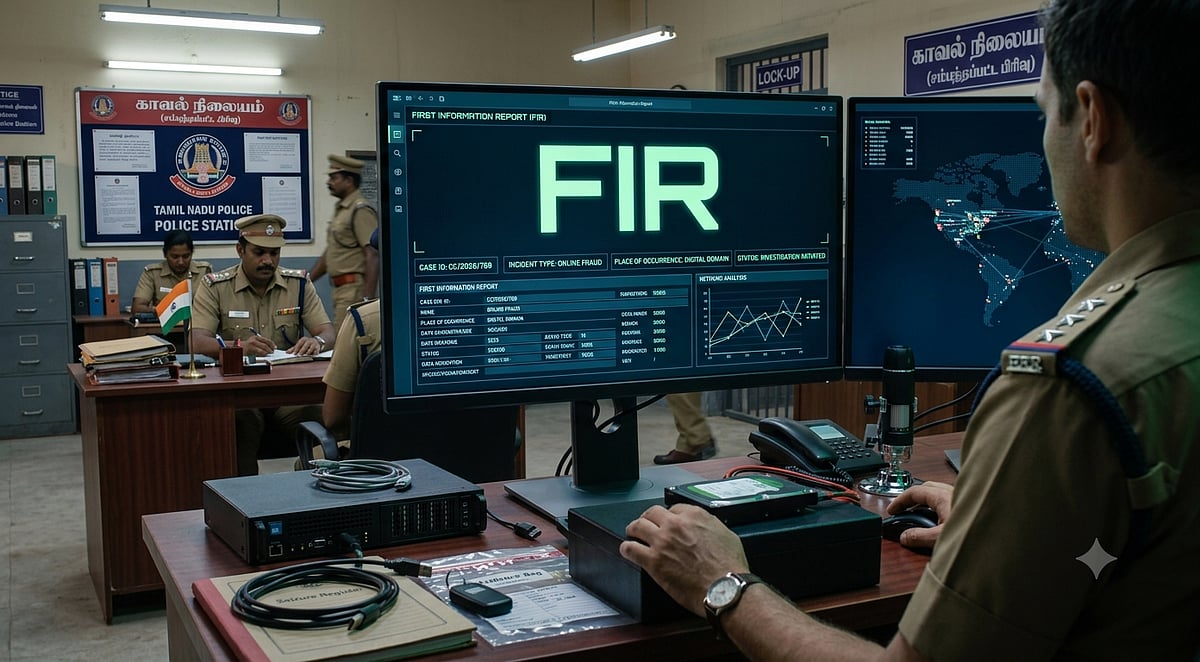
Similarly, FIR registration → arrest → charge sheet → proving the crime — all of these are different stages. In the end, it is the court that decides whether a person is guilty or not.
“Do I, the victim, have to go?” – Who can file an FIR?
Not at all!
There is no requirement that only the victim must give the information. Anyone who witnessed the incident firsthand (Eyewitness), or anyone who knows about the incident, can inform the police station.
"Sir, something has happened..." you can say in person, either orally or through electronic communication.
If you give the information orally, the police must record it in writing and read it back to you.
Also, the important right provided under Section 173(2) of the Bharatiya Nagarik Suraksha Sanhita, 2023 (BNSS) is that a copy of the recorded FIR must be given free of cost to the informant or the victim.
“This isn’t our area. Go to another station!” – Can they say that?
This is the very important thing we need to know!
"This incident did not happen within our jurisdiction, so go there and file a complaint," the police may sometimes try to turn you away. But the law does not say that.
According to BNSS Section 173(1), no matter where the offence occurred; regardless of the place of the offence, you can file a complaint and have an FIR registered at any police station near you. This is what we call a Zero FIR in practice.
That is, the confusion about which police station to go to should not delay filing a complaint or obtaining justice. No matter which station you give the information to, they should receive it and then forward it to the police station with the relevant jurisdiction; it is not proper procedure to turn you away saying, “This is not our area!”
“Should an FIR be filed immediately after a complaint is given?” – What did the Supreme Court say?
This is where the important case Lalita Kumari v. Government of Uttar Pradesh comes in.
In this case, the Hon’ble Supreme Court clarified that if the information provided clearly discloses a cognizable offence, registering an FIR is a mandatory duty of the police.
However, the current Bharatiya Nagarik Suraksha Sanhita, 2023 (BNSS) has a specific procedure in Section 173(3). In cognizable offences punishable with imprisonment of 3 years or more, but less than 7 years, a Preliminary Inquiry may be conducted, subject to the conditions laid down in the law, with the prior approval of an officer not below the rank of Deputy Superintendent of Police (DSP), to see whether there is a Prima Facie Case. If that inquiry reveals that a prima facie case exists, the subsequent investigation will be carried out accordingly.
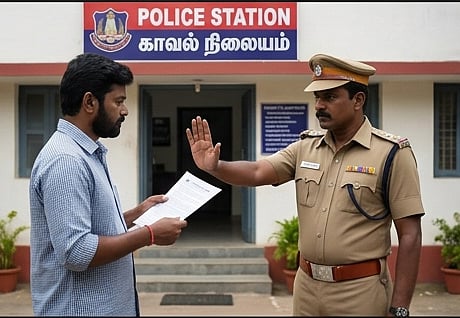
If the police refuse to file an FIR... what next?
You do not have to stop there. The law has given us alternative options as well:
Under Section 173(4) of the BNSS, if the officer in charge of the police station refuses to record the information, the substance of that information may be sent in writing and by post to the concerned Superintendent of Police (SP).
If no proper action is taken there as well, you can directly approach the Judicial Magistrate under Section 175(3) of the BNSS and file a petition seeking an order for a police investigation.
FIR is awareness, not intimidation!
No one needs to be confused anymore by the word FIR. It is not meant to paralyze you; rather, it is the first foundation for seeking justice for a problem you have faced and for initiating proper legal action.
Simply put, an FIR is the legal beginning of saying, “The police must investigate this information.”!