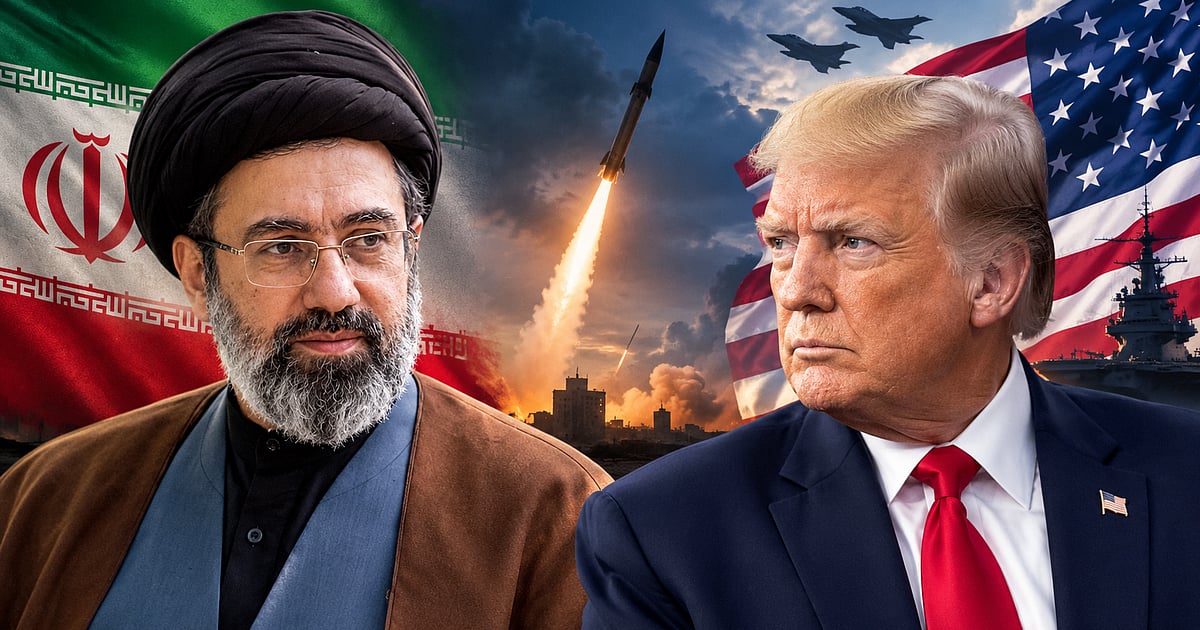
Since the Iran war began, crude oil prices have been on an upward trend.
At present, in the international market, a barrel of WTI oil is trading at $104 and Brent crude oil at $112.
November 3 is approaching (before this date, U.S. President Trump had said that an attack would be carried out on the United States). The current situation suggests that neither the United States nor Iran is moving toward peace — which means there is a strong possibility that crude oil prices will rise even further.

100 billion euros cost to Europe
At this time, German Chancellor Merz said about the Iran war, “In the past eight months alone, Europe has incurred a cost of more than 100 billion euros due only to the rise in energy prices caused by the Iran conflict.
As a result of this conflict, energy prices have risen, and businesses and consumers in Europe have paid more than 100 billion euros extra.
“We have a great economic interest in bringing this conflict to an end as quickly as possible,” he said.
Problem for the Middle East
Because of the Russia-Ukraine war, European countries do not import crude oil from Russia. They have been importing significant amounts of oil from Middle Eastern countries.
However, because of the Iran war, they are facing difficulties in obtaining their usual oil supply. Moreover, even though they import from the United States, Norway, Brazil, and the United Kingdom, crude oil prices are among the highest in the world, so European countries are experiencing the impact, as Merz says.

Araghchi’s statement
In a response seemingly aimed at Merz’s remarks, Iran’s Foreign Minister Abbas Araghchi wrote on his X page, “When Israel and the US began bombing Iran last year, Merz strongly praised and welcomed it.
He boasted, ‘They are doing Europe’s job.’
Compared with the shocking retaliation that Iran’s powerful armed forces are going to deliver against enemies who dare to harm our people, this 100 billion euros is nothing at all!
“Red lines are now a thing of the past!” he posted.
The situation of countries around the world
Merz has openly said that this is the situation for Europe. But this is also the situation for almost all countries around the world.
If the Iran war continues and crude oil prices rise further, the situation could become very bad globally.
Crude oil can be called the lifeline of the economy. From exports and imports to goods or services reaching consumers, petrol and diesel are extremely important.
When its supply decreases, the prices of petrol and diesel automatically rise. When these rise, the prices of goods and services that reach consumers also increase.
Protests have now erupted in European countries. If inflation rises further at this time, what will happen to the governments of those countries?

India..!
When it comes to our country, economic indicators such as GDP estimates and GST revenue are positive. But if inflation keeps rising, we need to consider how people will cope.
Because while inflation is rising, people’s incomes are not. Generally, during the Ayudha Pooja season, vehicle sales in India are high.
However, during the last Navaratri, retail vehicle sales fell by 6.52 percent compared with 2025. (According to data from the Federation of Automobile Dealers Associations)
Although many reasons are being cited for this, it is also evidence that people’s purchasing power has been affected.
Iran is not going to open the Strait of Hormuz until the war ends. Even in the recent security meeting, Iran’s supreme leader Mojtaba Khamenei reportedly advised that, in their country’s interest, they should keep Hormuz under their control.
As a result, to prevent the economies of the world from being hit, Iran has no choice but to agree to a ceasefire!