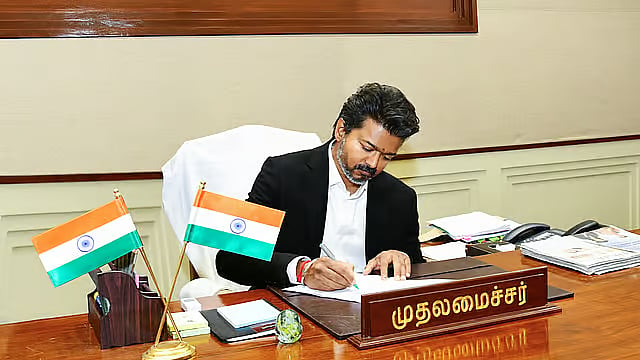
As dengue fever is spreading more widely in Tamil Nadu, Chief Minister C. Joseph Vijay has ordered officials to take comprehensive measures to prevent the spread of the fever.
A consultative meeting on precautionary measures for the northeast monsoon was held at the Secretariat on Monday under the chairmanship of Chief Minister Joseph Vijay.
At this meeting, Chief Minister Vijay instructed that areas vulnerable to seawater intrusion, coastal erosion, and flooding should be identified. He said that details of coastal villages likely to be affected and the people living there must be kept ready.
Furthermore, it should be ensured that weather and sea warnings reach fishermen in a timely manner, that there is a plan to evacuate people from areas vulnerable to flooding to safe locations, and that cyclone shelters and multipurpose safety centers are ready for use.
District collectors should ensure that buildings such as schools and community halls are used as relief camps as needed, and that drinking water, food, electricity, toilet, and medical facilities are kept ready there.
During emergency rescue operations, district-level emergency rescue teams must be kept ready, and boats, life-saving rafts, ropes, power generators, water pumps, and similar equipment must also be kept ready.
It must be ensured that paddy sacks stored in warehouses are kept safe and are not affected by rainwater. In addition, roads, rainwater drains, and bridges must be inspected using drones, and maintenance work must be carried out. The Chief Minister ordered that, during the monsoon season, awareness should be created among the public to prevent the spread of infectious diseases, and monitoring activities should be undertaken.
Dengue prevention: The Chief Minister held consultations with officials regarding dengue fever prevention measures. At that time, it was stated in the meeting that the dengue fever situation was being continuously reviewed at the state level, and that district-wise numbers of dengue fever patients, identification of mosquito breeding sites, mosquito larva and adult mosquito eradication measures, and the availability of fogging equipment were all being continuously monitored.
Following this, Chief Minister Vijay instructed that extensive measures be taken to conduct house-to-house field inspections through mosquito eradication workers, identify places where Aedes mosquitoes breed and carry out mosquito control work, provide the public with immediate medical advice for dengue fever, and create awareness about methods to prevent mosquito breeding.
He also ordered that government hospitals and primary health centers be kept in a state of readiness to detect dengue fever at an early stage and provide timely treatment.
The government said in a press release that the Chief Minister has ordered other departments associated with the Public Health Department to coordinate and carry out mosquito eradication and environmental cleanliness work.
Submission of the first-phase El Niño report: During this review meeting, Revenue and Disaster Management Department Minister K.A. Sengottaiyan presented the first-phase report of the expert advisory committee for climate change disaster management, known as El Niño, to Chief Minister Vijay.
17,277 people affected by dengue in Tamil Nadu
So far, 17,277 people in Tamil Nadu have been affected by dengue fever. Information has emerged that the spread of dengue is high in districts including Chennai, Chengalpattu, Coimbatore, Tiruvannamalai, Krishnagiri, Salem, Tiruvallur, Kanchipuram, Thanjavur, and Viluppuram.
In addition, the Public Health Department has stated that 4,648 people have so far been affected by tick fever, known as “scrub typhus.”
Regarding the spread of dengue and how to control it, Public Health Department Director Somasundaram said: During the northeast monsoon season, fever is spreading due to climate change. Among these, dengue fever is the most significant. Dengue fever increases every year in the months of June, July, August, September, and October.
In 2024, nearly 45,000 people were affected by dengue. In 2025, 25,000 people were affected by dengue fever. So far this year, 17,277 people have been affected. This is lower compared with previous years.
More than 25,000 mosquito larva eradication workers have been appointed across the state. They will go door to door to raise awareness among the public and carry out activities such as continuous monitoring. If you develop a fever, you should not self-medicate. You should consult a doctor and receive proper treatment.
The ‘ELISA IgM test’ is conducted for dengue fever. This testing facility is available in all district hospitals and medical college hospitals. In addition, we are monitoring how many such tests are being carried out in private hospitals and laboratories. For any health-related doubts, the public can contact 104, he said.