Those who do not learn from history are doomed to relive it, as the political saying goes.
In Uttar Pradesh, the national party Congress, which won only 7 and 2 seats in the last two Assembly elections (2017, 2022), has asked the Samajwadi Party, which is strong in the state, for 45 percent of the seats in the upcoming 2027 Assembly election.
“The Congress, which did not win even a total of 10 seats in both elections, demanding 181 seats in this election is an unusual bargain in the history of Indian elections. Does the Congress party have the moral right to make such demands?” That is the question now echoing in Uttar Pradesh political circles.
In the 2024 Lok Sabha election, Akhilesh Yadav’s ‘PDA’ strategy was the key to victory. But Congress believes that the 6 wins it got were due to its own support. In Akhilesh’s support circles, there is murmuring that Congress, which has only 2.33 percent of the votes and just 2 MLAs, is asking for the 22 sitting constituencies held by the Samajwadi Party out of ‘excessive greed.’
The Congress party may have forgotten that it lost its deposits in 380 constituencies in the last election. But Akhilesh Yadav will not so easily forget the bitter history of 2017, when it was given 114 seats and handed over 107 of those constituencies to the BJP. Political circles in Uttar Pradesh say the question hanging here is whether the Congress party, which always acts with a “big brother” mindset, is trying to put an end to that right at the start of coalition talks.
37 years of unfulfilled desire:
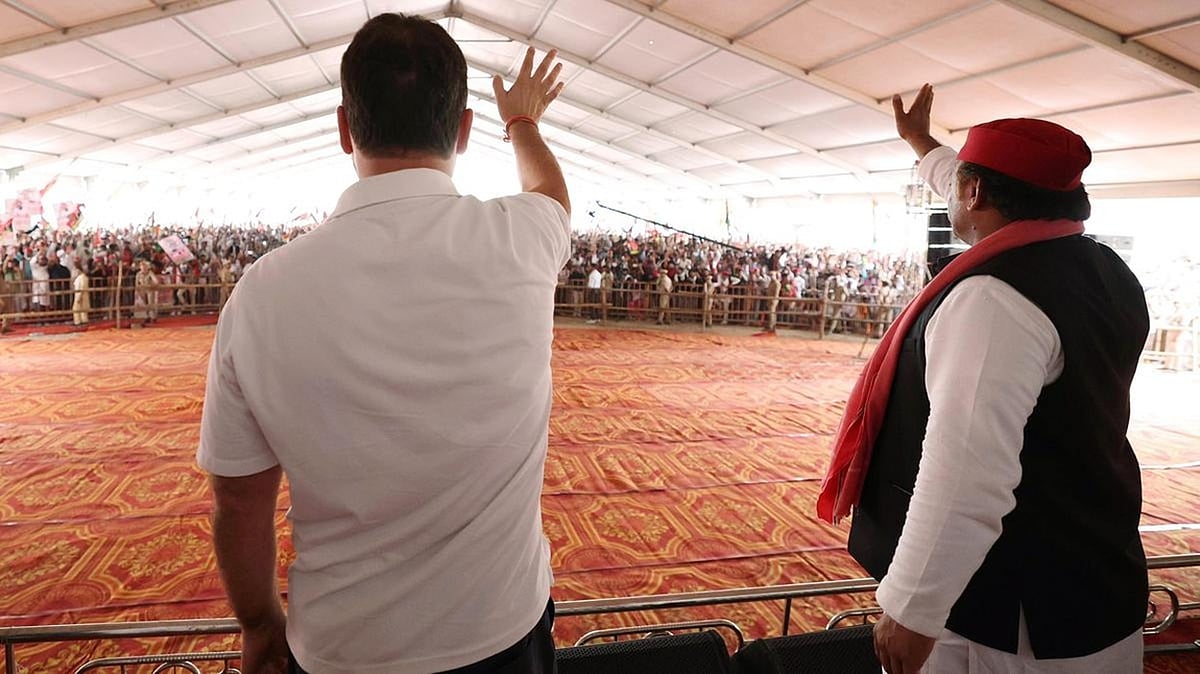
The Congress and the Samajwadi Party are set to form an alliance and contest the Uttar Pradesh Legislative Assembly election to be held in 2027. Since 1989, the Congress party has been declining, unable to capture power there. The party believes that it now has enough public support across the state to win on its own. But the reality on the ground is different.
Vote-bank fragmentation:
The three communities that were once the Congress’s strength until the 1980s—upper castes, Dalits, and Muslims—have now split among the BJP, Samajwadi Party, Bahujan Samaj Party, and Azad Party.
Outdated ideology:
In the 1990s, the Samajwadi Party took up the politics of backward-class reservation, while the BJP embraced Hindutva politics. Caught between these two poles of politics, the Congress’s ideology failed to gain traction.
Organizational and leadership gap:
In Uttar Pradesh, the largest state in the country, there are nearly more than 80,000 villages. The Congress no longer has the cadre strength to manage booth committees in all these villages. After Sonia and Rahul Gandhi stopped contesting in Uttar Pradesh, the absence of a strong state leader who could embrace all communities has become the party’s major weakness.
Is 181 seats possible?
In the last Lok Sabha election, Congress contested in alliance with the Samajwadi Party and won 6 of the 17 seats it fought, raising its vote share to 9.46%. In all those 6 constituencies, Congress’s vote share (44.2%) was slightly higher than that of the Samajwadi Party (43.4%).
However, even if the 6 Lok Sabha seats Congress won and the 2 closely contested Lok Sabha constituencies are added together, the party was ahead in only about 35 to 40 assembly constituencies.
In this situation, Congress asking for 181 seats is contrary to ground reality. “Can Congress prove that the constituencies it is demanding are justified based on its election performance, ground situation, and strength?” asked Samajwadi Party spokesperson Udayveer Singh.
The stubborn Congress and the uncompromising Samajwadi Party
On the issue of seat-sharing, Congress national president Mallikarjun Kharge has held consultations and formed a five-member committee including Priyanka Gandhi and K.C. Venugopal.
Congress is claiming constituencies including Rae Bareli, Amethi, Sultanpur, Lucknow East, Kanpur Cantonment, Baghpat, Loni, Mathura, Agra Rural, Meerut South, Varanasi South, Allahabad North, South, and Pilibhit. Many of these constituencies are places where the Samajwadi Party has won and also constituencies where the BJP is strong.
Meanwhile, Samajwadi Party sources firmly say, “There is absolutely no chance for 181 seats; based on the equation of winnability and vote bank, only 50 to 80 constituencies will be allotted.”
Chandrashekhar Azad - Owaisi alliance challenge
On the other hand, Chandrashekhar Azad, who won independently in the Nagina constituency, is gaining strength in western Uttar Pradesh by attracting Dalit youth who are not Jatavs. He has also announced a new alliance called the ‘Samajik Parivartan Morcha’ in partnership with Asaduddin Owaisi’s AIMIM party. This has created the risk of splitting Dalit and minority votes, which would favor the Samajwadi Party’s PDA strategy.
The Samajwadi Party’s strength lies in the combination of the 19 to 20 percent Muslim votes and the 9 to 10 percent Yadav votes in Uttar Pradesh. In the last Lok Sabha election, this alliance received 92 percent of the Muslim vote; if, in 2027, the Owaisi-Azad alliance were to split even 5 to 10 percent of the Muslim vote, it would be a major setback for the Samajwadi-Congress alliance.
Who will pay the price?
There is nothing wrong with Congress wanting to restore its old glory in Uttar Pradesh. But the political contradiction lies in expecting the Samajwadi Party to pay the price for it. If defeating the BJP is the INDIA alliance’s primary goal, then in seat-sharing, “winnability” should be the criterion rather than “prestige,” say political observers in Uttar Pradesh.
Trying to contest 181 constituencies without a strong booth-level structure can only amount to going out and inviting defeat. It will soon become clear whether Congress’s ‘mega demand’ was raised as a bargaining move for negotiations or with the ulterior motive of breaking the alliance. But political observers say that every stir in the opposition camp will only give fresh momentum to the ruling BJP.