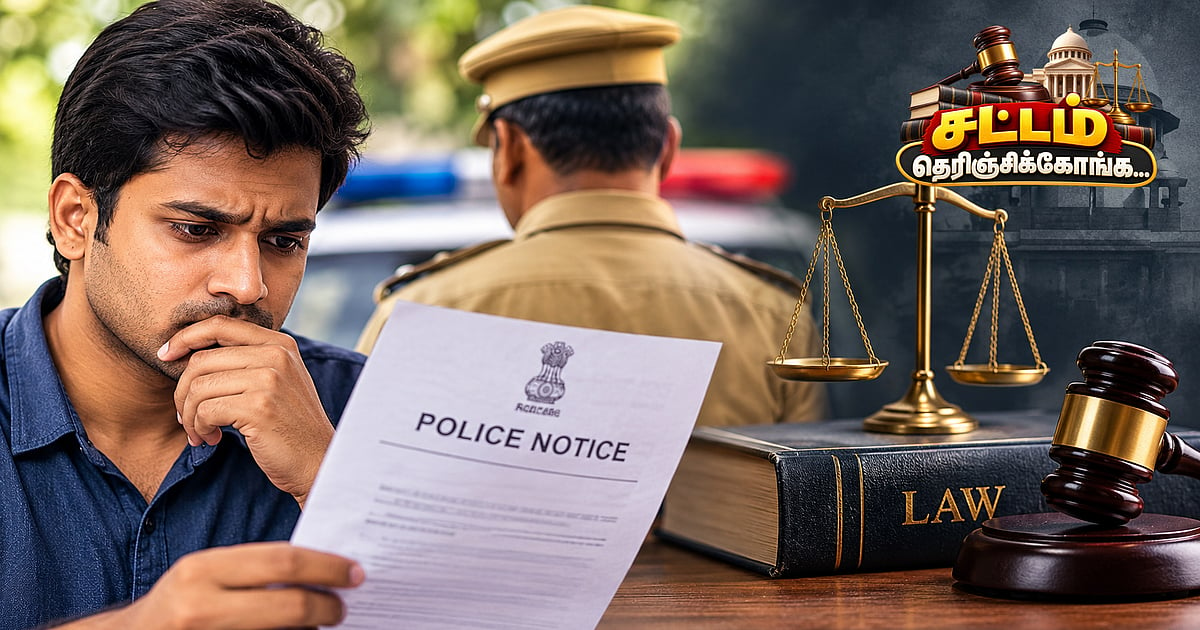
“You’ve received a notice from the police station asking you to come in for questioning…”
Just this one word can make many people panic. Thoughts start racing: “Are they going to arrest me?”, “Should I go to the police station?”, “Should I take a lawyer with me?”
First, one thing is clear: just because you’ve received a notice asking you to come for a police inquiry does not mean you have been arrested.
Is this a ‘summons’... or a ‘notice’?
Section 35(3) of the Bharatiya Nagarik Suraksha Sanhita (BNSS), 2023, is important. The law says that in situations where the police believe arrest is not immediately necessary in connection with an accusation, they must issue a notice requiring the person to appear at a specified place and time. In particular, for offenses punishable with imprisonment of up to seven years, when there is no legal necessity for immediate arrest, issuing a notice should be the general practice.
There is one thing to understand here. A court-issued “summons” is different; a police-issued notice under Section 35(3) is different. The two should not be treated as the same.
This notice should not be ignored. Under Section 35(4), it is the person’s duty to comply with the conditions stated in the notice.
“Can I just say, ‘I won’t come!’?”
No, that should not be done. A person who properly follows the notice and cooperates with the investigation should generally not be arrested for the same offense. However, if the police consider arrest necessary, Section 35(5) says they must record the reasons for it and also follow the arrest conditions specified in the law.

However, if you fail to comply with the conditions specified in the notice, you may be arrested under Section 35(6) of the BNSS, subject to the conditions prescribed by law. However, this does not mean that you will automatically be arrested merely because you did not comply with the notice. If you have a valid reason for being unable to appear on the date mentioned in the notice, it is advisable to inform the concerned police officer in advance and request an alternate date.
So, if you receive a notice, first carefully check the date, time, police station, case/FIR details, and so on.
“I’m not even guilty… why are they calling me?”
Not only a person involved in the crime; witnesses who know about the incident can also be called by the police for questioning.
Under Section 179 of the BNSS, the police have the authority, within the limits specified by law, to require by written order a person who may know the facts and circumstances of the case to appear for questioning. However, this section also provides special protection for certain persons.
Women, men under the age of 15, men over the age of 60, persons with mental or physical disabilities, and those suffering from serious illness cannot be compelled to appear at a place other than where they reside. However, if they voluntarily agree to come to the police station, they may be questioned there.
So, just because you have been called does not mean you are guilty.
Can I take a lawyer with me?
It is advisable to seek legal advice based on your situation. A person who has received a notice may consult a lawyer before going for the inquiry. They may also request that a lawyer accompany them. However, this does not create a general right for the lawyer to be present throughout the entire inquiry.

Do you have to answer all the questions asked during the inquiry?
Under BNSS Section 180(2), a person must answer truthfully the questions related to the case asked during the investigation. However, there is no obligation to give answers that may incriminate oneself or expose oneself to criminal punishment. This does not mean one should not cooperate with the investigation; the important point is to be aware of the protection provided by law.
Notice is different... arrest is different!
There is an important difference between a person who receives a notice and a person who is arrested.
Section 38 of the BNSS gives an arrested person the right to meet the lawyer of their choice during police interrogation. However, that section does not say that the lawyer must be present throughout the interrogation.
Receiving a notice does not by itself mean arrest. The circumstances for making an arrest are separately specified in Section 35 of the BNSS. Being asked to appear for questioning and being taken into custody are two different legal actions. A person who appears in compliance with a notice cannot be automatically arrested without lawful cause.
If arrested, the reason for the arrest must be informed under Article 22(1) of the Constitution; there is also the right to obtain legal advice. Further, under Article 22(2), a person must generally be produced before a magistrate within 24 hours.

If you receive a notice, don’t forget these 3 things!
1. Check the date, time, and place mentioned in the notice.
2. Read the details related to the case or FIR carefully.
3. If there is any legal matter you do not understand, obtain the necessary legal advice. Keep a copy of the notice and records or evidence of having appeared for the inquiry.
So… if you receive a police notice, do not panic. At the same time, do not take it lightly either. Read the notice, understand under which legal provision it has been issued, appear on the specified date, and cooperate as required by law—that is the right course of action. Receiving a notice does not mean you have been arrested or that your guilt has been proven.!