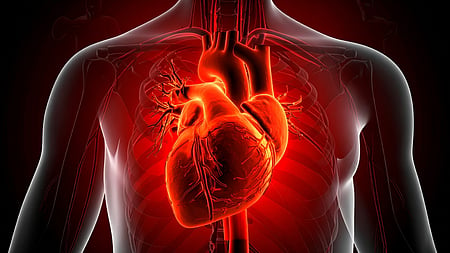
Doctors have warned that Delhi’s polluted air has become a major threat to the heart health of young people. It is said that long-term inhalation of PM 2.5 fine particles in the air, along with insufficient sleep, stress, and lack of physical activity, are the reasons for this.
World Heart Day was observed globally on Sept. 29. In this context, a recent study conducted by researchers from Hindu College and Zakir Husain College of Delhi University has revealed several noteworthy findings.
In Delhi during the winter, the average concentration of PM2.5 fine particles in the air was 269.35 micrograms per cubic meter. This is about 7 times higher than the national safety standard and 18 times higher than the World Health Organization’s guideline level.
By the end of December, this level had exceeded 700 micrograms. Due to this severe air pollution, the study indicates that the risk of death related to heart and lung conditions among young people may increase by 1.65 times. It also states that during highly polluted winters, 60.7 percent of young people experience effects such as coughing, sneezing, shortness of breath, or eye irritation.
Advice: Regarding this, Dr. Ujjeet Thir, Director of the Department of Cardiac and Vascular Surgery at a well-known private hospital in Gurugram, said: High blood pressure, diabetes, and high cholesterol are the usual factors behind heart disease. However, prolonged air pollution, irregular sleep, and stress are now further intensifying this risk.
The ultrafine particles in polluted air mix directly into the bloodstream and cause inflammation in the blood vessels. Because of this, even young people are now at risk of heart attacks, he said.
During periods of severe air pollution, doctors advise avoiding exercises that require strenuous physical exertion.
Regarding this, Dr. Ujjeeth Thir further said: One should avoid exercising based on information seen on social media. Exercises should be undertaken according to each person’s age, physical fitness, and medical treatment history. Intense workouts such as suddenly lifting heavy weights or running long distances put unnecessary strain on the heart. If symptoms such as chest pain, unusual shortness of breath, or dizziness appear, exercise should be stopped immediately, he said.
Similarly, the doctors involved in the study have advised that young people should get 7 to 9 hours of deep sleep every day and regularly monitor their blood pressure, blood sugar levels, and cholesterol.