Culture 3 min read•October 21, 2026

Have you received a legal notice? Don’t panic! - What does the law say? - 4

Have you received a legal notice? Don’t panic! - What does the law say? - 4

👶 Discover Authentic Tamil Baby Names

8,000+ pure Sangam names with audio pronunciation & numerology.

Search Name Finder 🔊

English

“We’ve sent you a legal notice!”

Just hearing that one phrase makes many people panic and think, “Oh no… have they filed a case against us in court?”

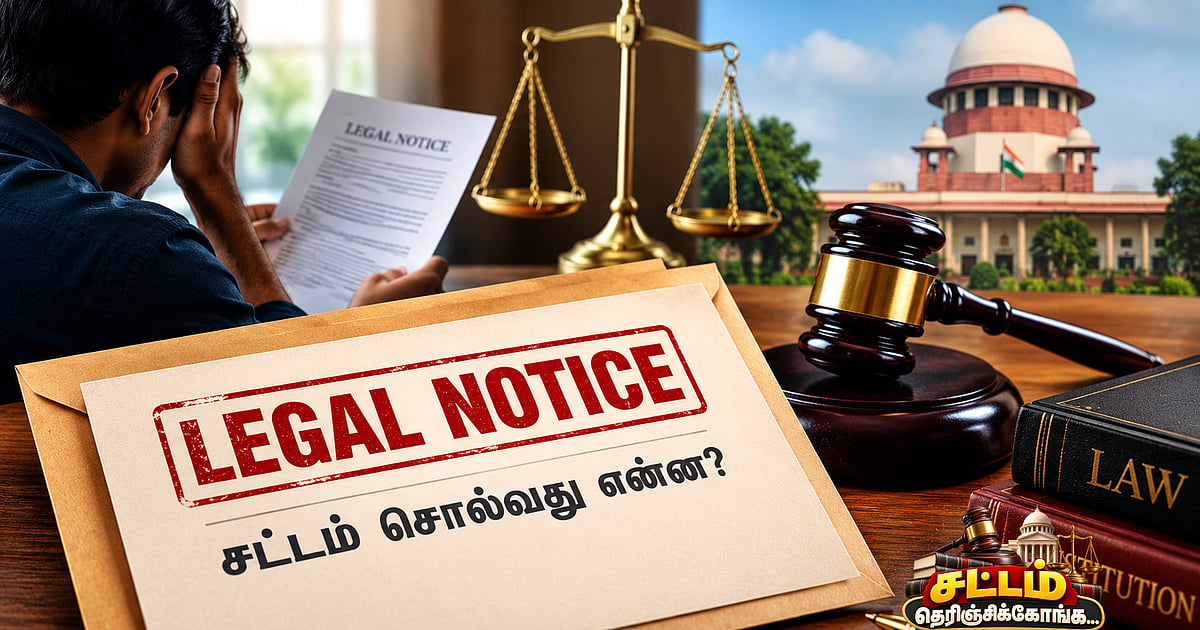
But first, understand one thing clearly. Just because you’ve received a legal notice does not mean a case has been filed against you in court. Likewise, it does not mean that the allegations mentioned in the notice have already been proven.

So what exactly is a legal notice? When is it sent? And what should you do if you receive one?

What is a legal notice?

A legal notice is a written communication sent to the opposing party about a legal issue, asking them to take a specific action or explaining one’s demand or legal position.

In many cases, it also serves as an opportunity to resolve the issue before approaching the court.

For example, if someone does not return the money they borrowed from you, you can send a legal notice asking them to repay it. Similarly, legal notices can also be used in cases involving breach of contract, property or rental disputes, and certain consumer issues.

Legal Notice

When should a legal notice be sent?

“Should a legal notice be sent for every problem?” Not necessarily.

Whether it is needed depends on the nature of the issue and the applicable law.

In some cases, a prior notice may be mandatory by law. For example, before filing certain civil suits against the government or against a public officer for an act alleged to have been done by him in the discharge of his official duties, a prior notice must be given under Section 80 of the Civil Procedure Code, 1908 (CPC). Generally, Section 80 of the CPC requires a two-month prior notice period. However, in certain situations where urgent relief is needed, Section 80(2) of the CPC allows a suit to be filed without waiting for that period, with the court’s permission.

Therefore, one should not think that a “legal notice” always refers to a specific section of a particular law. The rules vary depending on the circumstances and the relevant law.

Who can send a legal notice?

Generally, a legal notice is sent through a lawyer on behalf of the affected person.

A person can also send a legal notice on their own behalf.

Even so, since legal provisions, demands, deadlines, and similar details must be stated correctly, it is advisable to seek a lawyer’s advice.

What should a notice contain?

Simply writing “what happened?” does not make it a complete legal notice.

In a proper legal notice, it should generally be made clear who is sending the notice, to whom it is being sent, what the issue is, what the details of the events that occurred are, what the legal or contractual basis for the demand is, what the other party must do, and how much time is being given to respond or comply with the demand.

Has a legal notice arrived? What should you do?

First, don’t panic. At the same time, don’t ignore it either.

Read the notice carefully in full. Check whether the allegation or demand stated in it is true. Gather and keep the relevant documents, receipts, agreements, and details of financial transactions.

Legal Notice

If needed, you can show the notice to a lawyer and get legal advice. If you need to respond from your side, you can do so through a reply notice.

If the deadline given in the notice is ignored, the opposing party may take the next legal step. However, not every deadline mentioned in the notice automatically becomes a deadline prescribed by law. It depends on the relevant law, the contract, and the nature of the notice. Nevertheless, it is important to understand its legal consequences before ignoring it.

Moreover, before deciding whether to respond to the notice or not, the applicable legal time limit (Limitation Period) for pursuing the relevant case must also be considered. The mere sending of a notice does not automatically stop or extend the legal time limit in all cases.

It cannot be said that responding to every legal notice is legally mandatory in all circumstances. However, depending on the nature of the notice, the law applicable to it, the terms of the contract, and the consequences that may arise if you do not respond, it may be important to reply. Therefore, it is advisable to decide whether a response is necessary, and if so, how it should be given, with proper legal advice

So…

As soon as you receive a legal notice, don’t panic and say, “The case has gone to court!” At the same time, don’t dismiss it with, “It’s just a piece of paper...” The right approach is to understand what it says, on what legal basis the claim has been made, whether there is a need to respond, and what the deadline is, then obtain the necessary legal advice and take the next step.

Tanglish

''Ungalukku legal notice anuppiyirukkom!”

Indha oru vaarthaiyaik kettale, “Aiyyayyo… namma mela court-la case pottuttaangala?” endru palarum pathara aarambichuduvaanga.

Aana, mudhalla oru vishayathai theliva purinjukkonga. Legal notice vandhaale unga mela court-il vazhakku thodangivittadhu endru arthamillai. Adhepol, notice-il koorappattulla kutrachaattugal nirubikkappattuvittana endrum arthamillai .

Appadinna legal notice endraal enna? Eppodhu anuppuvaanga? Vandhaal enna seiyanum?

Legal notice endraal enna?

satta reethiyaana oru prachnai kuriththu ethirtharappukku ezhuththupoorvamaagath theriviththu, kurippitta nadavadikkaiyai edukka sollum allathu thanathu korikkai allathu satta nilaippattai vilakkum arivippudhaan leegal nootees.

pala nerangalil, needhimandraththai anuguvatharku mun prachnaiyai theerththukkollum oru vaaippagavum ithu irukkum.

udhaaranaththukku, oruvar ungalidam vaangiya panaththai thiruppik kodukkavillai endraal, panaththai thiruppith tharumaaru leegal nootees anuppalaam. athaipol, oppanthaththai meeruvathu, soththu allathu vadagai thodarbaana prachnaigal, sila nukarvor prachnaigal pondravatrilum leegal nootees payanpaduththappadalaam.

Legal Notice

Eppodhu Legal Notice anuppa vendum?

“Ella prachanaikkum Legal Notice anuppanuma?” endraal… appadi illai.

Prachanaiyin thanmai matrum sambandhappatta sattathai poruththuthaan adhu thevaiyaguma enbadhu mudivu seiyappadum.

sila vazhakkugalil, sattappadi mun noottis kattayamaga irukkalaam. Udhaharanamaaga, arasaangathirkko alladhu podhu adhikaari oruvar thanadhu adhikaarappoorvach seyalpaattil seydhadhaga koorappadum seyalukkaaga avarukku edhiragavo, sila sivilla vazhakkugalai thodarvadharku mun, Civil Procedure Code, 1908 (CPC) pirivu 80-n keezh mun noottis vazhangga vendum. Podhuvaaga, CPC pirivu 80-n keezh irandu maadham kaala mun noottis thevaiyagum. Iruppinum, avasara nivaaranam thevaiyappadum sila soozhnilaigalil, needhimandratthin anumadhiyudan andhak kaalathai pinpatraamal vazhakku thodara CPC pirivu 80(2) vazhivakkukiradhu.

Adhanaal, “Legal Notice endraale oru kurippitta sattathin pirivu” endru ninaikka koodaadhu. Soozhnilai matrum sambandhappatta sattathai poruthu vidimurai maarum.

Yaar Legal Notice anuppalaam?

Podhuvaaga, baadhikkappatta nabarin saarbil vazhakkarinar moolam Legal Notice anuppappadugiradhu.

Oruvar thannudaiya saarbilum Legal Notice anuppa mudiyum.

Irunthaalum, sattappirivugal, korikkai, kaalakkedu pondravaitrrai sariyaga kurippida vendiyiruppadhaal, vazhakkarinarin aalosanaiyai peruvadhu nalladhu.

Notice-il ennenna irukka vendum?

“Enna nadandhadhu?” enbadhai mattum ezhudhivittaal adhu muzhumaiyaana Legal Notice aagividaadhu.

Oru muraiyana legal notice-il podhuvaga, yaar notice anuppugiraargal, yaarukku anuppappadugiradhu, prachnai enna, nadandha sambavangalin vivaram enna, korikkaikkana sattam alladhu oppandha adippadai enna, ethirtharappu enna seiya vendum, badhil alikkavo alladhu korikkaiyai niraivettravO evvalavu kaala avakasam valangappadugiradhu pondra vishayangal thelivaga irukka vendum.

Legal notice vandhuchaa? Enna seiyanum?

Mudhalil bayappadatheenga. Adhe nerathil, alatchiyappaduthavum vendaam.

pnoetteesai muzhumaiyaakap patingka athil koorappattulla kurrassaattu allathu koerikkai unmaiyaa enpathaip paarungka sampanthappatta aavanangkal raseethukal oppanthangkal panap parivarththanai vivarangkal poenravarrais saekariththu vaiyungkalp figureimg alt srchttpsgumletvikatancomvikatan2026-10-21l1idh9p0Legal_Notice__Law_and_Justicepng figcaptionleekal noetteesfigcaptionfigure pthaevaippattaal oru vazhakkarinjaritam noetteesaik kaatti satta aaloesanai peralaam ungkal tharappil pathil alikka vaentiyirunthaal pathil noettees moolamaaka pathil alikkalaamp

Oruvelai nottisil kodukkappattulla kaalakkeduvai alatchiyappaduththinaal, ethirtharappu aduththa satta nadavadikkaiyai edukkalaam. Aanaal, nottisil kurippidappattulla ovvoru kaalakkeduvum thaanagave sattathaal nirnayikkappatta kaalakkeduvaagividathu. Athu sambandhappatta sattam, oppantham matrum nottisin thanmaiyai poruththathu. Iruppinum, athai alatchiyappaduththuvatharku mun athan satta vilaivugalai purinthukolvathu avasiyam.

Melum, Notice-ukku pathil alippathu allathu pathil alikkamal iruppathu thodarpaaga mudivu edukkum mun, sambandhappatta vazhakkai thodarvatharkana sattak kaala varambaiyum (Limitation Period) gavanikka vendum. Notice anuppiyiruppathu mattume ellaa vazhakkugalilum sattak kaala varambai thaanaga niruthividathu allathu neettithividathu .

Ovvoru legal notice-ukkum badhil alippadhu ella soozhnilaigalilum sattappadi kattayam endru solla mudiyadhu. Aanaal, notice-in thanmai, adharkup porundhum sattam, oppandha nibandhanaigal matrum adharkup badhilalikkavittal erpadakoodiya vilaivugalai poruthu badhil alippadhu mukkiyamaaga irukkalaam. Enave, badhil alikkavenduma, alithaal eppadi alikka vendum enbadhai uriya satta aalosanaiyudan mudivu seivadhu nalladhu

Adhanaal…

Leegal nootees vandhadhume “kortla kes aayiduchu!” endru pathara vendaam. Adhe nerathil, “oru paperdhaane…” endru alatchiyappaduthavum vendaam. Adhil enna solliyirukkiradhu, endha sattathin adippadaiyil korikkai vaikkappattulladhu, adharkup badhilalikka vendiya avasiyam ulladhaa, kaalakkeedu enna enbavatrai purindhukondu, thevaiyaana satta aalosanaiyai petru adutha kattam nadavadikkaiyai eduppadhudhaan sariyana vazhi.

Tamil

''உங்களுக்கு லீகல் நோட்டீஸ் அனுப்பியிருக்கோம்!”

இந்த ஒரு வார்த்தையைக் கேட்டாலே, “அய்யய்யோ… நம்ம மேல கோர்ட்ல கேஸ் போட்டுட்டாங்களா?” என்று பலரும் பதற ஆரம்பிச்சுடுவாங்க.

ஆனா, முதல்ல ஒரு விஷயத்தைத் தெளிவா புரிஞ்சுக்கோங்க. லீகல் நோட்டீஸ் வந்ததாலே உங்க மேல கோர்ட்டில் வழக்கு தொடங்கிவிட்டது என்று அர்த்தமில்லை. அதேபோல, நோட்டீஸில் கூறப்பட்டுள்ள குற்றச்சாட்டுகள் நிரூபிக்கப்பட்டுவிட்டன என்றும் அர்த்தமில்லை .

அப்படின்னா லீகல் நோட்டீஸ் என்றால் என்ன? எப்போது அனுப்புவாங்க? வந்தால் என்ன செய்யணும்?

லீகல் நோட்டீஸ் என்றால் என்ன?

சட்ட ரீதியான ஒரு பிரச்னை குறித்து எதிர்தரப்புக்கு எழுத்துப்பூர்வமாகத் தெரிவித்து, குறிப்பிட்ட நடவடிக்கையை எடுக்கச் சொல்லும் அல்லது தனது கோரிக்கை அல்லது சட்ட நிலைப்பாட்டை விளக்கும் அறிவிப்புதான் லீகல் நோட்டீஸ்.

பல நேரங்களில், நீதிமன்றத்தை அணுகுவதற்கு முன் பிரச்னையைத் தீர்த்துக்கொள்ளும் ஒரு வாய்ப்பாகவும் இது இருக்கும்.

உதாரணத்துக்கு, ஒருவர் உங்களிடம் வாங்கிய பணத்தைத் திருப்பிக் கொடுக்கவில்லை என்றால், பணத்தைத் திருப்பித் தருமாறு லீகல் நோட்டீஸ் அனுப்பலாம். அதேபோல், ஒப்பந்தத்தை மீறுவது, சொத்து அல்லது வாடகை தொடர்பான பிரச்னைகள், சில நுகர்வோர் பிரச்னைகள் போன்றவற்றிலும் லீகல் நோட்டீஸ் பயன்படுத்தப்படலாம்.

லீகல் நோட்டீஸ்

எப்போது லீகல் நோட்டீஸ் அனுப்ப வேண்டும்?

“எல்லா பிரச்னைக்கும் லீகல் நோட்டீஸ் அனுப்பணுமா?” என்றால்… அப்படி இல்லை.

பிரச்னையின் தன்மை மற்றும் சம்பந்தப்பட்ட சட்டத்தைப் பொறுத்துத்தான் அது தேவைப்படுமா என்பது முடிவு செய்யப்படும்.

சில வழக்குகளில், சட்டப்படி முன் நோட்டீஸ் கட்டாயமாக இருக்கலாம். உதாரணமாக, அரசாங்கத்திற்கோ அல்லது பொது அதிகாரி ஒருவர் தனது அதிகாரப்பூர்வச் செயல்பாட்டில் செய்ததாகக் கூறப்படும் செயலுக்காக அவருக்கு எதிராகவோ, சில சிவில் வழக்குகளைத் தொடர்வதற்கு முன், Civil Procedure Code, 1908 (CPC) பிரிவு 80-ன் கீழ் முன் நோட்டீஸ் வழங்க வேண்டும். பொதுவாக, CPC பிரிவு 80-ன் கீழ் இரண்டு மாத கால முன் நோட்டீஸ் தேவைப்படும். இருப்பினும், அவசர நிவாரணம் தேவைப்படும் சில சூழ்நிலைகளில், நீதிமன்றத்தின் அனுமதியுடன் அந்தக் காலத்தைப் பின்பற்றாமல் வழக்கு தொடர CPC பிரிவு 80(2) வழிவகுக்கிறது.

அதனால், “லீகல் நோட்டீஸ் என்றாலே ஒரு குறிப்பிட்ட சட்டத்தின் பிரிவு” என்று நினைக்கக் கூடாது. சூழ்நிலை மற்றும் சம்பந்தப்பட்ட சட்டத்தைப் பொறுத்து விதிமுறை மாறும்.

யார் லீகல் நோட்டீஸ் அனுப்பலாம்?

பொதுவாக, பாதிக்கப்பட்ட நபரின் சார்பில் வழக்கறிஞர் மூலம் லீகல் நோட்டீஸ் அனுப்பப்படுகிறது.

ஒருவர் தன்னுடைய சார்பிலும் லீகல் நோட்டீஸ் அனுப்ப முடியும்.

இருந்தாலும், சட்டப்பிரிவுகள், கோரிக்கை, காலக்கெடு போன்றவற்றை சரியாகக் குறிப்பிட வேண்டியிருப்பதால், வழக்கறிஞரின் ஆலோசனையைப் பெறுவது நல்லது.

நோட்டீஸில் என்னென்ன இருக்க வேண்டும்?

“என்ன நடந்தது?” என்பதை மட்டும் எழுதிவிட்டால் அது முழுமையான லீகல் நோட்டீஸ் ஆகிவிடாது.

ஒரு முறையான லீகல் நோட்டீஸில் பொதுவாக, யார் நோட்டீஸ் அனுப்புகிறார்கள், யாருக்கு அனுப்பப்படுகிறது, பிரச்னை என்ன, நடந்த சம்பவங்களின் விவரம் என்ன, கோரிக்கைக்கான சட்ட அல்லது ஒப்பந்த அடிப்படை என்ன, எதிர்தரப்பு என்ன செய்ய வேண்டும், பதில் அளிக்கவோ அல்லது கோரிக்கையை நிறைவேற்றவோ எவ்வளவு கால அவகாசம் வழங்கப்படுகிறது போன்ற விஷயங்கள் தெளிவாக இருக்க வேண்டும்.

லீகல் நோட்டீஸ் வந்துடுச்சா? என்ன செய்யணும்?

முதலில் பயப்படாதீங்க. அதே நேரத்தில், அலட்சியப்படுத்தவும் வேண்டாம்.

நோட்டீஸை முழுமையாகப் படிங்க. அதில் கூறப்பட்டுள்ள குற்றச்சாட்டு அல்லது கோரிக்கை உண்மையா என்பதைப் பாருங்க. சம்பந்தப்பட்ட ஆவணங்கள், ரசீதுகள், ஒப்பந்தங்கள், பணப் பரிவர்த்தனை விவரங்கள் போன்றவற்றைச் சேகரித்து வையுங்கள்.

லீகல் நோட்டீஸ்

தேவைப்பட்டால், ஒரு வழக்கறிஞரிடம் நோட்டீஸைக் காட்டி சட்ட ஆலோசனை பெறலாம். உங்கள் தரப்பில் பதில் அளிக்க வேண்டியிருந்தால், பதில் நோட்டீஸ் மூலமாக பதில் அளிக்கலாம்.

ஒருவேளை நோட்டீஸில் கொடுக்கப்பட்டுள்ள காலக்கெடுவை அலட்சியப்படுத்தினால், எதிர்தரப்பு அடுத்த சட்ட நடவடிக்கையை எடுக்கலாம். ஆனால், நோட்டீஸில் குறிப்பிடப்பட்டுள்ள ஒவ்வொரு காலக்கெடுவும் தானாகவே சட்டத்தால் நிர்ணயிக்கப்பட்ட காலக்கெடுவாகிவிடாது. அது சம்பந்தப்பட்ட சட்டம், ஒப்பந்தம் மற்றும் நோட்டீஸின் தன்மையைப் பொறுத்தது. இருப்பினும், அதை அலட்சியப்படுத்துவதற்கு முன் அதன் சட்ட விளைவுகளைப் புரிந்துகொள்வது அவசியம்.

மேலும், நோட்டீஸுக்குப் பதில் அளிப்பது அல்லது பதில் அளிக்காமல் இருப்பது தொடர்பாக முடிவு எடுக்கும் முன், சம்பந்தப்பட்ட வழக்கைத் தொடருவதற்கான சட்டக் காலவரம்பையும் (Limitation Period) கவனிக்க வேண்டும். நோட்டீஸ் அனுப்பியிருப்பது மட்டுமே எல்லா வழக்குகளிலும் சட்டக் காலவரம்பைத் தானாக நிறுத்திவிடாது அல்லது நீட்டித்துவிடாது .

ஒவ்வொரு லீகல் நோட்டீஸுக்கும் பதில் அளிப்பது எல்லா சூழ்நிலைகளிலும் சட்டப்படி கட்டாயம் என்று சொல்ல முடியாது. ஆனால், நோட்டீஸின் தன்மை, அதற்குப் பொருந்தும் சட்டம், ஒப்பந்த நிபந்தனைகள் மற்றும் அதற்குப் பதிலளிக்காவிட்டால் ஏற்படக்கூடிய விளைவுகளைப் பொறுத்து பதில் அளிப்பது முக்கியமாக இருக்கலாம். எனவே, பதில் அளிக்க வேண்டுமா, அளித்தால் எவ்வாறு அளிக்க வேண்டும் என்பதை உரிய சட்ட ஆலோசனையுடன் முடிவு செய்வது நல்லது

அதனால்…

லீகல் நோட்டீஸ் வந்ததுமே “கோர்ட்ல கேஸ் ஆயிடுச்சு!” என்று பதற வேண்டாம். அதே நேரத்தில், “ஒரு பேப்பர்தானே…” என்று அலட்சியப்படுத்தவும் வேண்டாம். அதில் என்ன சொல்லியிருக்கிறது, எந்தச் சட்டத்தின் அடிப்படையில் கோரிக்கை வைக்கப்பட்டுள்ளது, அதற்குப் பதிலளிக்க வேண்டிய அவசியம் உள்ளதா, காலக்கெடு என்ன என்பவற்றைப் புரிந்துகொண்டு, தேவையான சட்ட ஆலோசனையைப் பெற்று அடுத்த கட்ட நடவடிக்கையை எடுப்பதுதான் சரியான வழி.