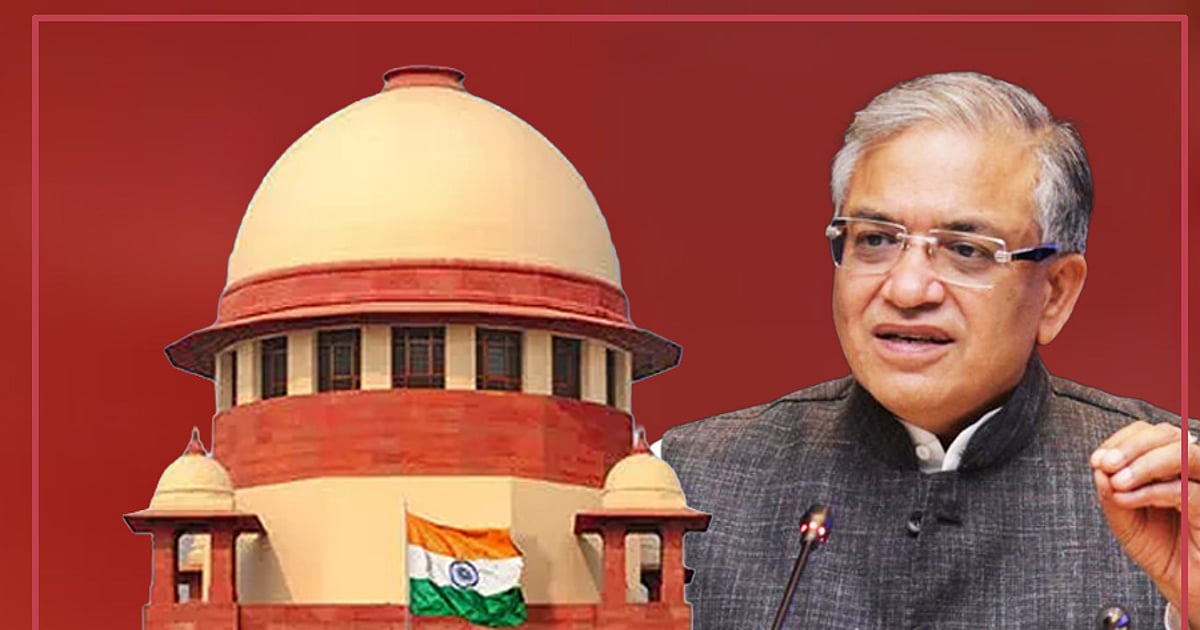
In a highly significant case concerning the functioning of the Election Commission of India, the Supreme Court has ordered that notice be issued to the central government.
The Supreme Court has admitted for hearing a petition seeking action against Chief Election Commissioner Gyanesh Kumar, Senior Deputy Election Commissioner Manish Garg, and Information Technology Division Director General Seema Khanna, and also urging the formation of a special investigation team over the deletion of the names of around 130 million voters from the electoral rolls.
A bench comprising Chief Justice of India Surya Kant, Justices Joymalya Bagchi and V. Mohana heard this case today and issued several important orders.
Reports have emerged that the Chief Election Commissioner of India, Gyanesh Kumar, took several decisions unilaterally without consulting the two Election Commissioners or accepting their decisions, and in particular, that he independently brought changes to the rules regarding the addition and deletion of names in the voter list, sparking a major controversy.
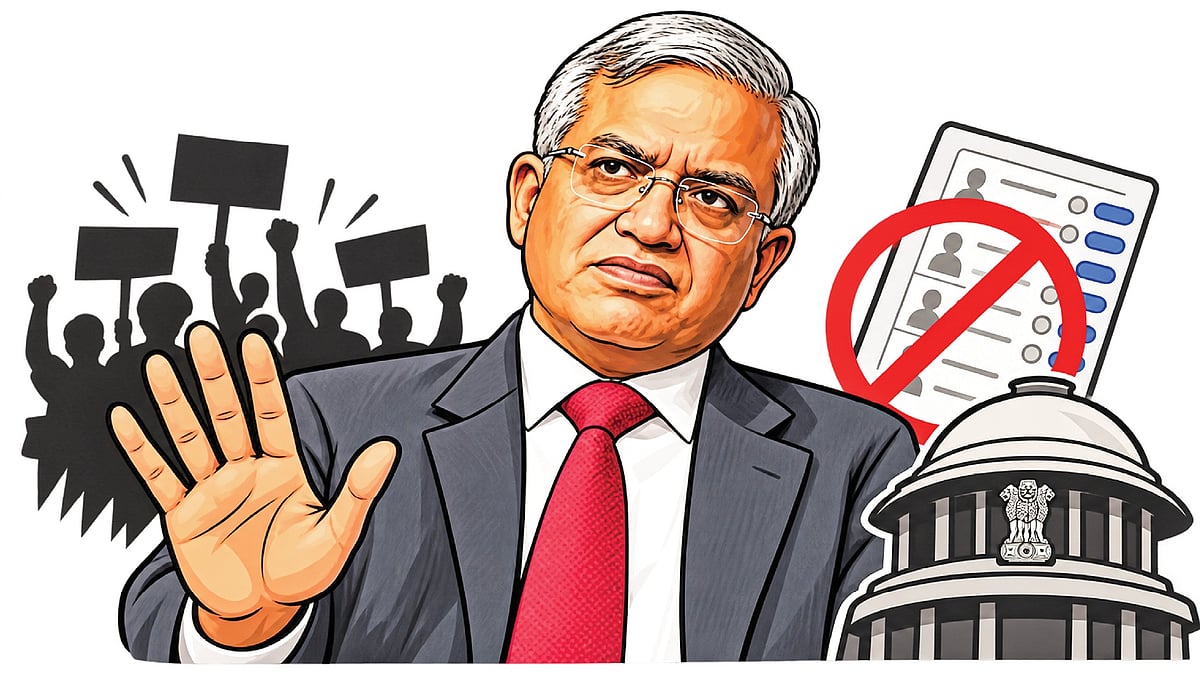
As protests against the Election Commission intensify across the country, related cases have also been filed in the Supreme Court.
It has come to light that over the 10-month period from November 2025 to August 2026, the other two Election Commissioners, Dr. Sukhbir Singh Sandhu and Dr. Vivek Joshi, formally recorded their objections 14 times against decisions taken unilaterally by Chief Election Commissioner Gyanesh Kumar without consulting them.
The statutory powers of voter registration officers were stripped and brought under the authority of the Information Technology division.
In Goa, despite the Chief Electoral Officer of Goa writing eight times to reinstate 97 eligible voters on the list, the software was not given a "Rollback" (reinstatement feature), and they were denied the right to vote.
In West Bengal, 16.10 lakh appeals were filed in the name of the Election Commission against voters who were restored by court officials. However, no information about this was conveyed to the other two Election Commissioners or to the Chief Electoral Officer of West Bengal; nor was any permission obtained.
It has been alleged that during the SIR exercise, the names of around 13 crore voters across the country were arbitrarily removed, and the petition seeks the formation of a Special Investigation Team (SIT) or a commission of inquiry headed by a retired Supreme Court judge to investigate this.
Senior advocate Menaka Guruswamy, on behalf of advocate Shailendra Mani Tripathi, appeared in court and argued.
``The right to vote in the world’s largest democracy is under threat. Through the Election Commission’s special intensive revision exercise, voters’ rights are being taken away. In Delhi, 30 percent of voters, and in West Bengal, 25 percent of voters, have been affected.
More than 16 lakh appeals are pending before appellate tribunals. The Chief Election Commissioner’s functioning is one-sided. Fair elections are a question mark today" she argued forcefully.
The petition states that 14 major decisions were taken in the name of the Election Commission regarding SIR, and that both Election Commissioners had raised objections to them.
Appearing for the petitioner, Senior Advocate Vikas Singh urged that the Chief Election Commissioner be suspended and an interim order be issued.
He pointed out that since the Election Commission is a multi-member body, the law states that decisions should be taken unanimously, and if there is no consensus, the decision should be made on a majority basis.
However, the court refused to issue an ex parte interim order regarding the suspension of Gyanesh Kumar.
The judges said that the response of the Election Commission and the concerned parties must first be obtained. The bench also said that the court currently assumes the Election Commission’s decisions were taken in accordance with the law, and if the responses reveal that the decisions were made in violation of the law, action including annulment of those decisions can be taken.
Chief Justice Surya Kant further said that an interim order cannot be issued solely on the basis of newspaper reports. The judges questioned that if Gyanesh Kumar is suspended, the functioning of the Election Commission would be affected, and who would conduct the elections.
Vikas Singh replied that the other two Election Commissioners can also carry out the duties.
Meanwhile, senior advocate Menaka Guruswamy appeared in another petition related to the case. Issues including the SIR proceedings, procedures related to the voter list, and changes made in Form 6 have also been challenged in these cases.
The Supreme Court has decided to hear both cases together and has adjourned the matter.
The judges said, "We have also been doing our work properly and have been examining the case." They also said that they would issue a notice to the Central Government in this regard.
A bench headed by Chief Justice Surya Kant has firmly clarified that the Supreme Court has not approved the changes made by the Election Commission of India to 'Form 6' for adding names to the voter list.
This clarification came after the Election Commission had issued a press release stating that the Supreme Court had approved the changes to Form 6.
The Election Commission had taken steps to add an additional declaration to Form 6, which is used to register as a new voter during the Special Intensive Revision (SIR) of the electoral roll.
It stated that the applicant must specify whether their name, or the names of their parents or grandparents, had appeared in the previous electoral roll.
The Election Commission had issued a press release on September 26 stating that the Supreme Court had approved this additional condition. In this context, the bench hearing the related case, comprising Chief Justice Surya Kant and Justices Joymalya Bagchi and V. Mohana, categorically stated, "We have not given any approval to the modified Form 6."
The judges also said that when the documents are submitted, the court will examine who made the changes to this form.
The Supreme Court’s clarification has gained significance amid reports that even the Election Commissioners opposed this arbitrary action by the Election Commission. The petitioner has also insisted that criminal action be taken against the erring officials under Section 32 of the Representation of the People Act, 1950.
In this case, which has caused a major stir, the next course of action will depend on the response given by the central government.