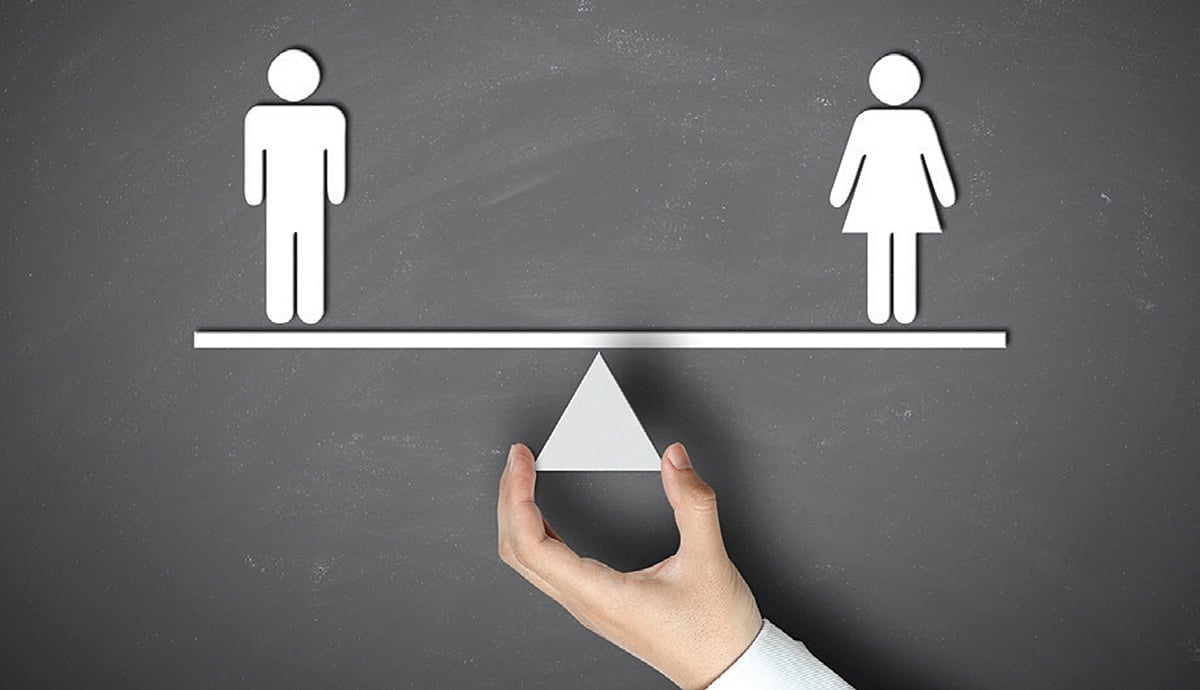
The World Economic Forum has said it will take 120 years to close the global gender gap. It said that gender gaps have been monitored since 2006 for this purpose. In the 20th edition of the Global Gender Gap Report, gender parity stands at 69.2 percent.
Only when it reaches 100 percent does it mean full equality has been achieved. The current level is 0.4 percent higher than last year. For the 17th consecutive year, Iceland remains in first place as the country with the smallest gender gap (93 percent).
India has improved slightly compared with last year. However, there has been no change in its 131st position globally. The Central African country of Chad is at the bottom of the rankings. Along with it, Iran and Pakistan are in the last three places.
What does the gender gap index mean...
For the past two decades, the measure of the Global Gender Gap Index has been based on progress across four dimensions: economic participation and opportunity, educational attainment, health and survival, and political empowerment.
The number of countries monitored continuously since 2006, which was 97, has now increased to 145. This makes it possible to assess long-term gender parity.
The global gender gap index is measured on a scale of 0 to 1. The scores assigned indicate how much the gap has been reduced.
Comparisons between countries make it possible to understand strengths and weaknesses. If compared on the basis of the economy, it is possible to identify the best policies for reducing the gender gap.
Achievers
For the 17th year, Iceland continues to lead, having narrowed the gap by 93 percent. It is also the only country to have reached the status of having reduced the gap by more than 90 percent.
Finland (87.2 percent) and Norway (85.7 percent) are in second and third place respectively for the third consecutive year. Namibia (84.5 percent) is in fourth place.
Next are England (84.2 percent), New Zealand (82.8 percent), Sweden (82.3 percent), Australia (81.9 percent), Germany (81.7 percent), and Ireland (81.4 percent).
Australia has entered the top 10 for the first time. Since 2006, Iceland, Finland, Norway, and Sweden have remained in the top 4.
Countries that have moved up in this year’s rankings include Kenya (65th place, [up 33 places]), Ghana (56th place, [up 32 places]), Guatemala (50th place, [up 31 places]), Angola (87th place [up 30 places]), and the Czech Republic (77th place [up 25 places]).
Key details in this year’s index:
Among the 97 countries tracked since 2006, the gap has been reduced by 5.2 percentage points, reaching 69.4 percent, the highest level ever recorded. Before the coronavirus pandemic, progress in narrowing the gender gap had reached its peak.
Before setbacks began to increase during that period, 76 percent of countries had made gains. The gap is smaller in health and survival (96.2 percent) and educational attainment (96.9 percent).
Economic participation and opportunity (61.7 percent) and political empowerment (22.1 percent) are the areas with the largest gender gaps.
Political progress has increased over the past 20 years. Across all countries monitored so far, it has risen by nearly 8 percent. In 2006, there was one female minister for every 8.1 male ministers.
Currently, there is one female minister for every 4.3 male ministers. In parliaments, the ratio has changed from one woman for every 5.6 men to one woman for every three men.
In 62 countries, since 2024, women’s representation in senior executive positions has been increasing by an average of 30 percent. The proportion of women in the workforce has risen from 39.9 percent in 2015 to 41.8 percent in June 2026.
During the same period, women’s share in leadership roles increased from 26.7 percent to 29.6 percent. At the same time, women’s representation in senior positions is declining. In 2026, it has been cut in half from entry level to top executive level (from 46 percent to 23 percent).