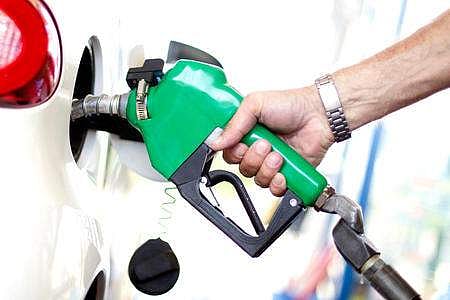
“It has been ensured that the ‘E20’ petrol distributed by public sector oil companies is of the appropriate quality,” the Union Petroleum Ministry clarified on Saturday.
The Union Ministry issued this clarification in response to allegations made by the Karnataka government that the fuel sold at some retail outlets contains an excessive ethanol blend.
To reduce the country’s dependence on imported crude oil for petrol and diesel use, the central government has been promoting the distribution of ethanol-blended petrol. The ethanol blend in petrol has been gradually increased, and currently 20 percent ethanol-blended petrol (E20) is being distributed across the country in most places.
In this context, the state government recently conducted tests at an accredited laboratory on petrol samples collected from petrol stations in various districts of Karnataka. The results of this study revealed that Indian Oil petrol contained 31.2 percent ethanol, while petrol from other companies such as Hindustan Petroleum, Bharat Petroleum, and Nayara contained 30.5 percent ethanol. This confirmed that more ethanol had been blended than the government-mandated 20 percent.
Pointing this out, Opposition Leader Rahul Gandhi strongly criticized the central government.
In response to this, the Ministry of Petroleum and Natural Gas said in a press release issued on Saturday:
Following the Karnataka government's allegation, the three public sector oil companies—Indian Oil, Bharat Petroleum and Hindustan Petroleum—tested 893 petrol samples collected across 27 states and Union Territories in the country, including 56 samples collected from outlets in Karnataka owned by public sector undertakings.
It has been confirmed that the petrol is within the permitted standard. That is, the amount of ethanol blended in the petrol has been confirmed to be within the permitted range of 19 to 21 percent, in accordance with the Bureau of Indian Standards’ ‘IS 17021’ regulations.
These findings are completely contrary to the recent press release issued by the Karnataka State Department of Food, Public Distribution, Consumer Affairs and Legal Metrology, which stated that additional ethanol had been blended.
Furthermore, as per the rules, when subjected to inspection, 6 samples should be collected in a one-liter quantity. Of these, 2 samples should be sent to the concerned petrol retail outlet owner, 2 samples to the concerned oil company or department, and 2 samples to the laboratory.
The inspection results obtained on the Karnataka government’s side cannot be accepted because the legal procedures were not followed and the technical details related to the testing were not disclosed. In particular, the details of the standard test method used to detect ethanol content, including the dilution process, were not specified. It has also been reported that the public sector oil companies stated that details such as the state government collecting samples outlet-wise and the laboratory reports were not provided.