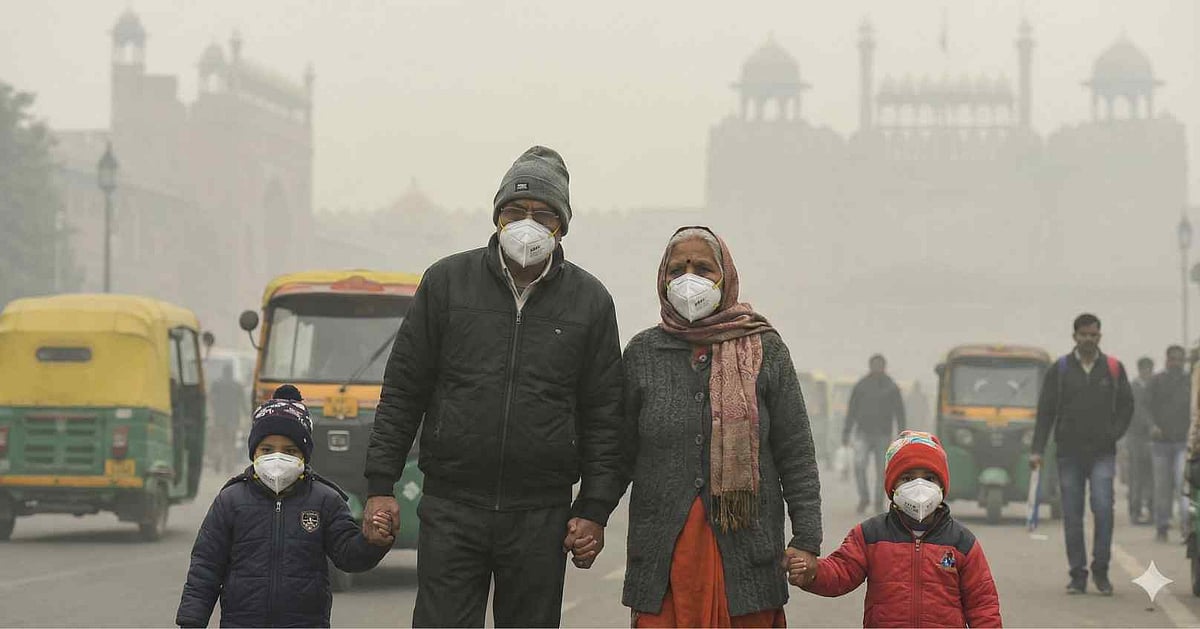
As soon as Diwali arrives, pollution becomes a major headache in Delhi, the capital of India.
This is not only because of the firecrackers burst during Diwali. Every year, in the months of October and November, farmers in neighboring states such as Punjab and Haryana begin preparing their land to grow wheat.
To prepare the land quickly, they burn the crop residue left behind after the previous harvests.
The northwesterly winds blowing in that region carry those thick smoke clouds into Delhi. This is becoming a major problem for Delhi.

30 cigarettes...
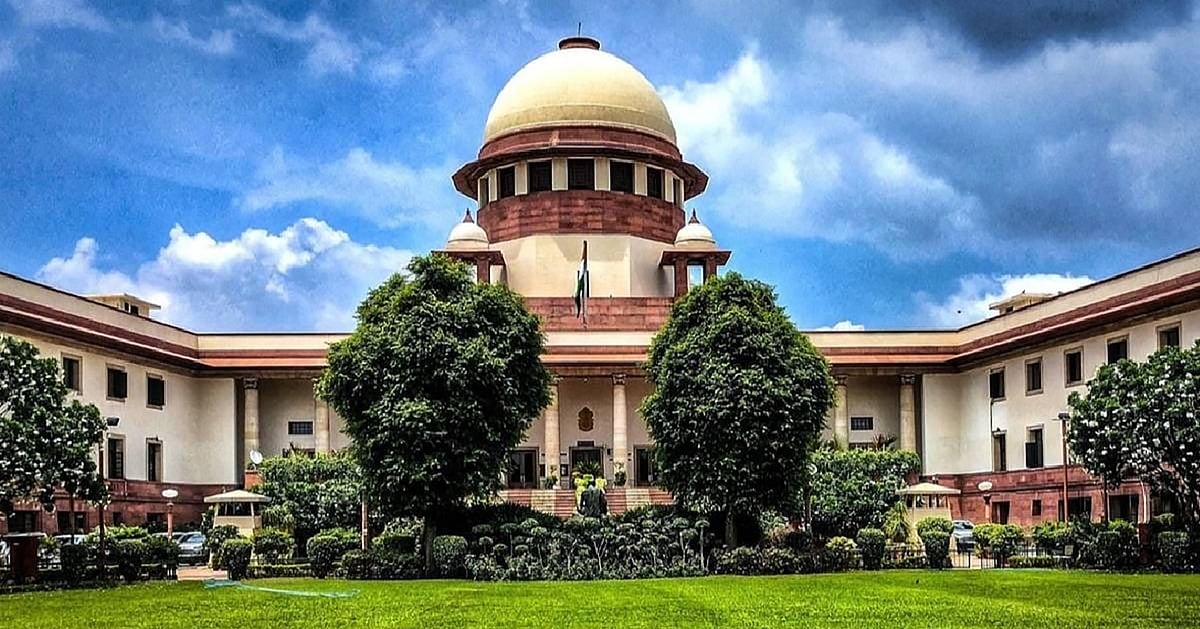
Today (November 6), the Supreme Court heard a petition related to controlling Delhi's air pollution. A three-judge bench comprising Chief Justice of India Surya Kant and Justices Joymalya Bagchi and V. Mohana heard the case.
“I hope you are all enjoying the Delhi weather,” said Chief Justice Surya Kant as he began hearing the case.
During the arguments, senior advocate Aparajita Singh noted, “My voice has been affected by Delhi’s pollution. Breathing the air here is equivalent to a person smoking 30 cigarettes a day.”
While the judges were speaking, they said, “It has rained now. As a result, the pollution has reduced somewhat. Also, since farmers are preparing for the next sowing season, the burning of crop residue would have stopped by now.”
To this, Aparajita Singh argued, “Crop residue burning accounts for 14 percent of Delhi’s air pollution. Therefore, urgent measures are needed to immediately stop local pollution, including waste burning, and crop residue burning.”
In response to Aparajita Singh, “We always keep talking only about crop residue... but what about the upper class?
All vehicles, including luxury cars, are continuing to run, aren’t they...” the Supreme Court asked.
Additional Solicitor General Aishwarya Bhati, appearing on behalf of the Central Government, explained what measures have been taken by the Central Government regarding Delhi’s pollution...
> To control pollution caused by vehicle emissions, no vehicle other than those compliant with Bharat Stage 6 (BS-6) norms is allowed to enter Delhi.
> Diesel-powered rickshaws are being phased out gradually.
> Strict restrictions have been imposed on buses entering Delhi from other cities. Geotagging is being done at the very place where pollution certificates are issued. Fuel is not being provided without a certificate.
> Due to Delhi’s geographical layout, air cannot easily escape during the winter. To control the situation, the ‘Graded Response Action Plan’ (GRAP) is being implemented.
Finally, the Supreme Court has ordered that the procurement price for crop residues (parali/straw) should be announced in advance to prevent the burning of crop residues, and that methods for managing them should be provided to village panchayats.