
"The government should take action to resolve the hardships of farmers who are struggling hard to save withering crops in the delta districts," said PMK leader Dr. Anbumani Ramadoss.

In a statement issued by him regarding this, "Since water has not been released into the Cauvery from the Mettur dam for more than a month, and since the northeast monsoon has not brought the expected amount of rain, the samba and thaladi crops cultivated in the Cauvery irrigation districts have begun to wither. While farmers are struggling hard to save the withering crops, the government should take action to alleviate their distress.
In the Cauvery irrigation districts, it is customary to cultivate samba and thaladi crops over an area of more than 18 lakh acres. Although water is released into the Cauvery from the Mettur dam starting on September 1, they realized that it would not be possible to supply water throughout the entire cultivation period, so they have usually cultivated samba and thaladi crops on only about 7 lakh acres, less than half the usual extent. However, even those crops could not be saved.
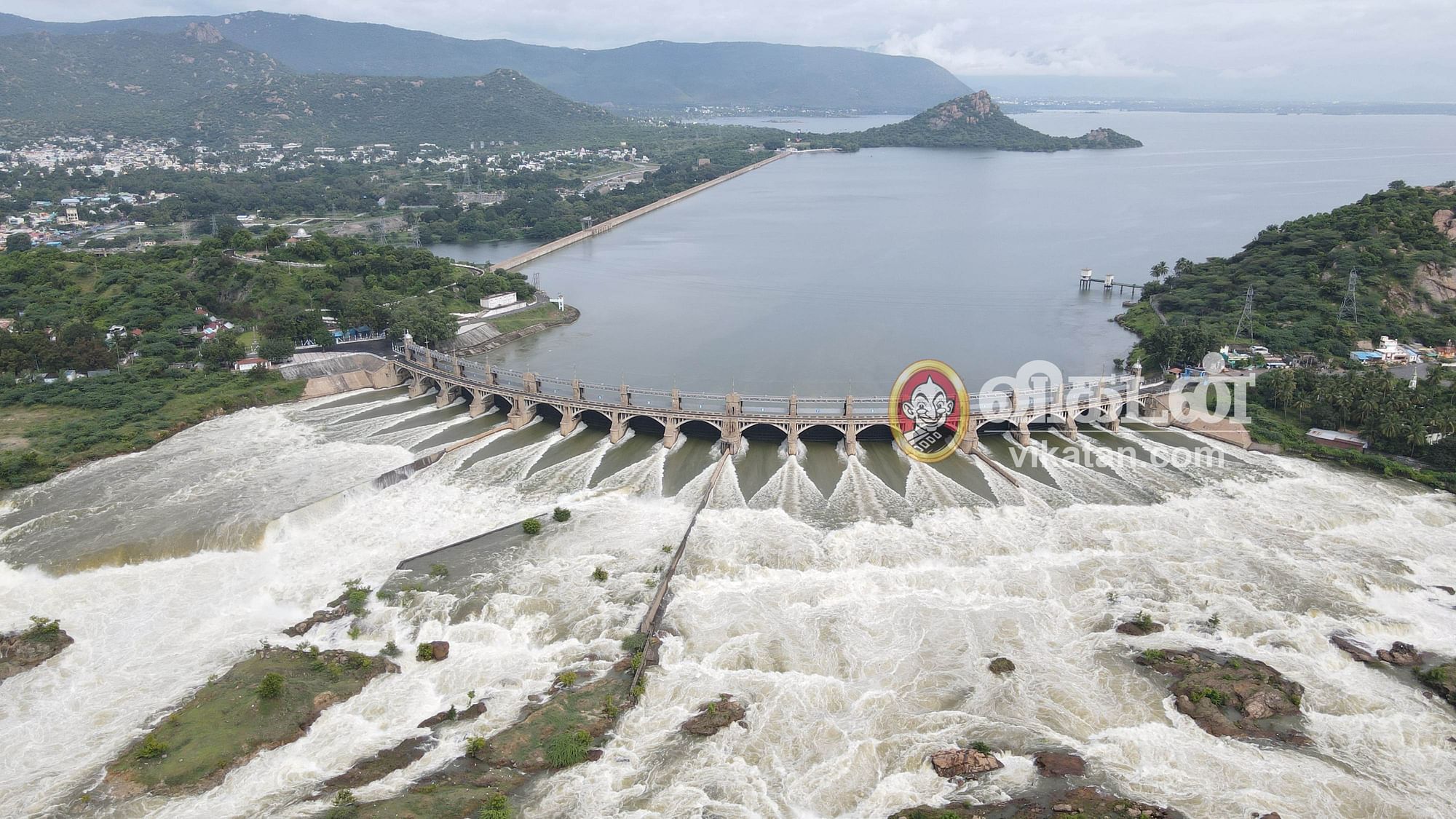
Citing the lack of sufficient water in the Mettur dam, the water release, which was 10,920 cubic feet per second on October 15, was gradually reduced and brought down to 1,003 cubic feet per second on October 25. Even now, water is being released at the same level. It will meet only a part of the drinking water requirement. On the other hand, the northeast monsoon, which farmers had been hoping for with confidence, has also not brought significant rainfall so far, which is why samba and thaladi crops in the Cauvery irrigation districts have begun to wither.
To save the samba paddy crop, farmers in some areas are buying water from outside and releasing it into their fields. Farmers who cannot afford it are drawing water from nearby water bodies in pots and pouring it on the crops. However, the average lifespan of samba-thaladi crops is 120 to 125 days. But most crops have now only reached 40 to 50 days, and it is not possible to supply water in this manner for another 70 to 80 days. Only if the northeast monsoon brings some rain in the next few days, and water is released from the Mettur dam in December and January, can the samba crops be saved.
As of this morning (21.11.2026), the water level of the Mettur Dam has fallen to 61.53 feet, and the water storage has decreased to 25.84 TMC. With this water, water can be supplied for only a maximum of one week. If the northeast monsoon also does not bring significant rainfall, the crops cannot be saved.
Since water was not released from the Mettur dam, kuruvai cultivation was not carried out on a large scale this year. Now, for the samba and thaladi crops, farmers have spent between Rs. 25,000 and Rs. 30,000 per acre. In such a situation, if the samba-thaladi crops also wither and burn due to drought, the damage caused to farmers cannot be repaired at all. Farmers in the Cauvery irrigation districts who have taken loans at interest to cultivate samba will be trapped in an irrecoverable debt burden.
The TVK government, which had promised that farmers’ crop loans would be completely waived, has now waived only Rs 75,000 of debt for all farmers, and cooperative banks are pressuring them to immediately pay the remaining loan amount. If the losses incurred in samba cultivation are added to this, farmers’ situation will worsen.
"The only way to save farmers from this dire situation is to send a team of officials to the Cauvery irrigation districts, inspect them, and declare them drought-affected areas. Compensation should be provided at the rate of Rs 40,000 per acre for the samba-thaladi crops withered by the drought. Along with fully waiving all taxes, including land tax, the crop loans that farmers are required to repay should also be completely written off," he said.