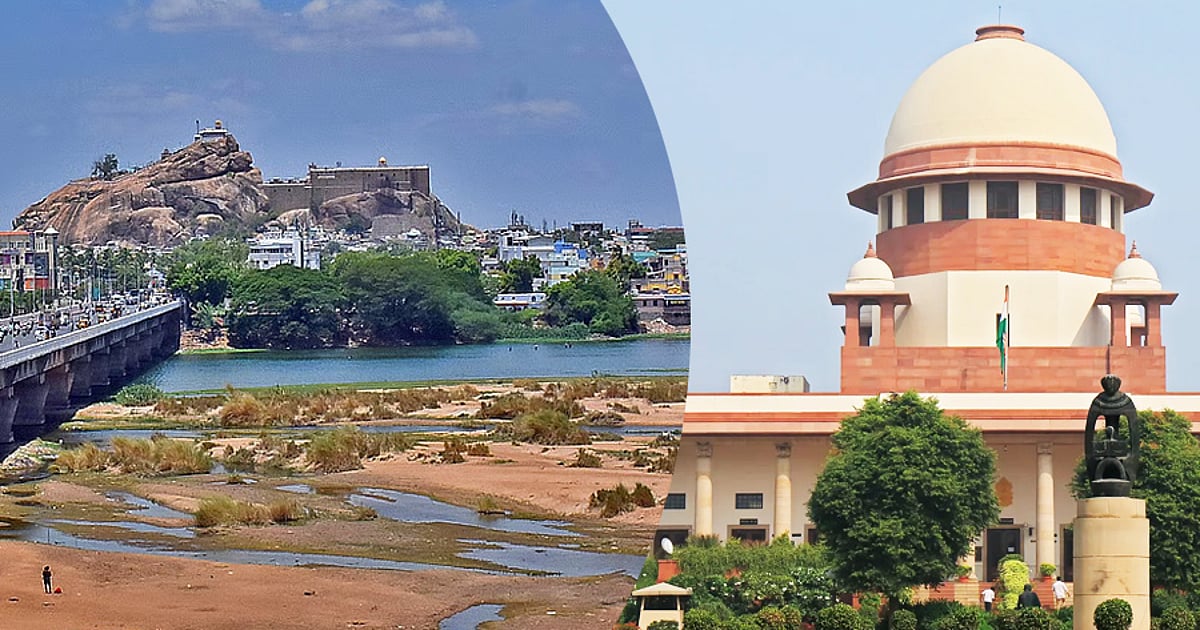
The Supreme Court today (November 20) dismissed two of the three interim petitions filed by the Tamil Nadu government regarding the Cauvery river water sharing dispute.
In addition, the judges have ordered that the hearing on the third new petition be adjourned for a week.
The Supreme Court refused to issue any directions to the Karnataka government, which is being seen as a major legal setback for the Tamil Nadu government led by Chief Minister Vijay.
Background of the case
According to the final verdict of the Cauvery Tribunal and the Supreme Court order, Tamil Nadu should be supplied with 177.25 TMC of water annually. However, in the current irrigation year, from July until October 12, there was a shortfall of 11 TMC in the water Karnataka was supposed to release.

Following this, the Tamil Nadu government had filed interim petitions in the Supreme Court seeking an order to immediately release the pending 11 TMC of water, and also seeking directions to the authority to allocate water on a proportional basis according to the water storage in the dams during years of water scarcity.
These petitions came up for detailed hearing before a bench comprising Justices Vikram Nath and Ahsanuddin Amanullah on October 12 last year.
Senior advocates Mukul Rohatgi, Umapathi, and Guru Krishna Kumar, appearing on behalf of the Tamil Nadu government, argued, "The Karnataka government is continuously disrespecting the Supreme Court’s verdict and the orders of the Cauvery Commission. The Cauvery Commission is acting in a one-sided manner by hearing only Karnataka’s arguments; it is not taking into account the previous shortfall in water. Agricultural work in the delta districts has come to a complete standstill."

Senior advocate Shyam Divan, appearing on behalf of Karnataka, said, "Several districts in Karnataka have been affected by drought; cities including Bengaluru are facing a severe drinking water shortage. During surplus water periods, we have released more than 177.25 TMC of water. Therefore, there is no need for the court to intervene in this matter."
At that point, Justice Vikram Nath interjected, "Every time Tamil Nadu says there is a water shortage; but Karnataka provides data showing that more water has been released than ordered. An explanation for this is needed" and adjourned the verdict without specifying a date.
Meanwhile, the Cauvery Water Management Authority, which met on October 23, had ordered Karnataka to release 3,000 cubic feet of water per second to Tamil Nadu every day. However, alleging that Karnataka had not implemented even that order, the Tamil Nadu government filed a third fresh petition seeking enforcement of the authority’s directive.
What happened in the Supreme Court today?
The order on the two petitions that had already been adjourned without a specified date, as well as the hearing on the third fresh petition filed by the Tamil Nadu government, came up for hearing today before the bench of Justices Vikram Nath and Ahsan Kumar Singh.
First petition dismissed:
The judges dismissed the Tamil Nadu government's petition seeking the immediate release of the 11 TMC of deficit water that had remained pending from July until October 12.
Second petition dismissed: The judges also dismissed the second interim petition seeking an order to distribute water on a proportional basis during periods of water shortage.
Third petition adjourned: The judges, hearing the third petition filed against Karnataka's failure to release the 3,000 cusecs of water ordered by the Cauvery Commission on October 23, expressed strong displeasure.
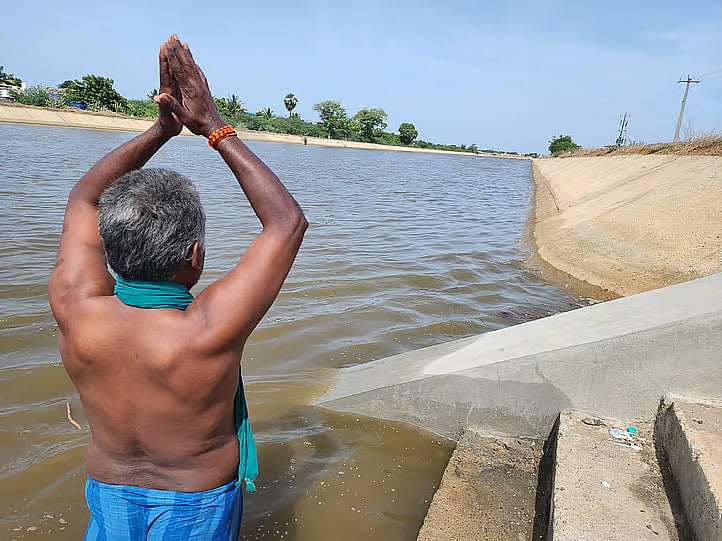
Key points made by the judges:
During the hearing, the judges recorded important remarks expressing displeasure over the Tamil Nadu government's petitions. "How many more petitions will you keep filing in the Cauvery issue?" the judges asked directly.
Not only did they dismiss the first two petitions, but the judges firmly stated, "We are dismissing this third petition you have filed right now as well."
Shocked by this, the lawyers representing the Tamil Nadu government requested a one-week adjournment to explain the necessity of this petition
Accepting that request, the judges ordered that the hearing on the third petition be adjourned for a week.
In particular, in today’s hearing, the Supreme Court refused even to issue the slightest directions against the Karnataka government.
What kind of consequences will this order have?
The Supreme Court’s stance today has created a situation that will have several important consequences for Tamil Nadu’s farmers and the political arena.
The legal avenues for recovering the pending 11 TMC of water have almost come to an end. Moreover, the court’s rejection of Tamil Nadu’s long-standing demand for “proportional sharing” during shortage periods could also work against Tamil Nadu in future drought years.
Even though Karnataka withheld water release by disregarding the Cauvery Commission’s orders, the Supreme Court did not issue any warning or directive to Karnataka, which has worked in favor of the Karnataka government.
As a result, Karnataka’s hand continues to remain strong in the Cauvery dispute. With samba cultivation already affected due to insufficient water, the lack of immediate relief through the court has caused deep concern and disappointment among Cauvery delta farmers.
Karnataka opens the water only when Tamil Nadu is in need and, if there is heavy rainfall and it is unable to store the water in its reservoirs, only then does it release the water. This ruling by the Supreme Court has created the possibility that Karnataka may continue the same stance in the future as well. At present, the only legal option left in Tamil Nadu’s hands is the third petition.
In the hearing to be held after a week, the next course of action will depend on how strongly the Tamil Nadu government is able to prove that Karnataka violated the order issued by the Cauvery Commission on October 23 to release 3,000 cubic feet of water.