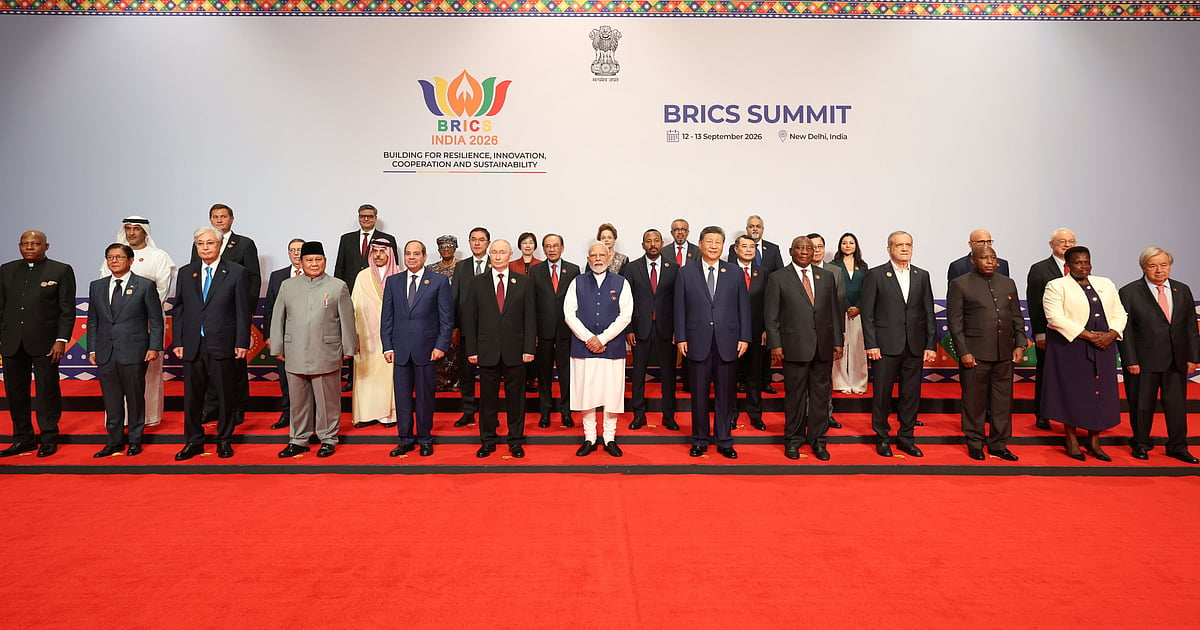
Under India’s leadership, the 18th BRICS Summit has been successfully concluded in Delhi.
At this summit, leaders from several countries took part, including Chinese President Xi Jinping, Russian President Putin, Iranian President Masoud Pezeshkian, and South African President Cyril Ramaphosa.
Indian Prime Minister Modi also met individually with Putin, Masoud Pezeshkian, Xi Jinping, and the Crown Prince of the United Arab Emirates, Sheikh Khaled bin Mohamed bin Zayed Al Nahyan.
Let us first look at the key highlights of this BRICS summit...
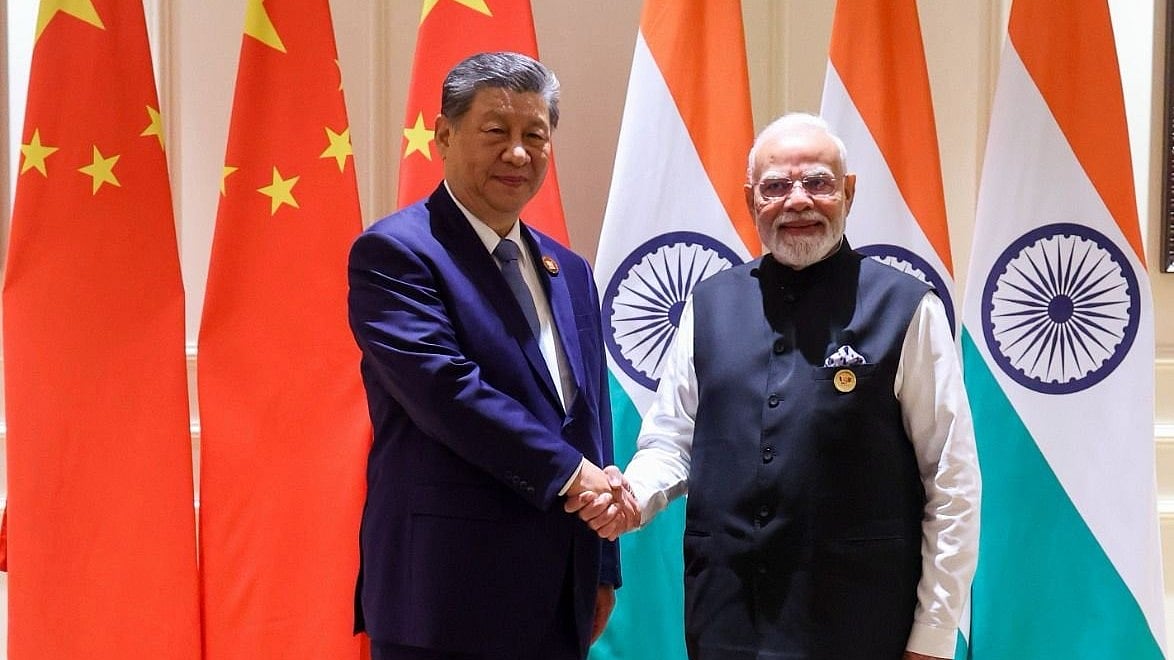
> Chinese President Xi Jinping has come to India after nearly 7 years, since 2019. After the India-China clash in the Galwan Valley, Modi had gone to China for the Shanghai conference last year.
Xi Jinping has come to India this year.
These visits show that the two countries are moving a little away from conflict and entering into friendship.
> The two most important wars currently taking place in the world are: one, the Russia-Ukraine war, and the other, the Iran war.
Both Russia and Iran are member countries of BRICS. The presidents of both countries attended this conference. They also held separate meetings with Modi.
Modi’s meeting with them can be expected to pave the way for oil imports from Russia and for Indian ships stranded in the Strait of Hormuz.
Moreover, India will always remain neutral in any war. India has been consistently insisting that the war must be stopped. This would certainly have been reflected in private meetings as well.
> It is not openly said that China and Russia are supporting Iran in the Iran war... but it is a truth everyone knows.
Videos of Iran’s Foreign Minister Abbas Araghchi, China’s Foreign Minister Wang Yi, and Russia’s Foreign Minister Sergey Lavrov talking and laughing at the BRICS summit went viral.
This shows the closeness among those three countries.
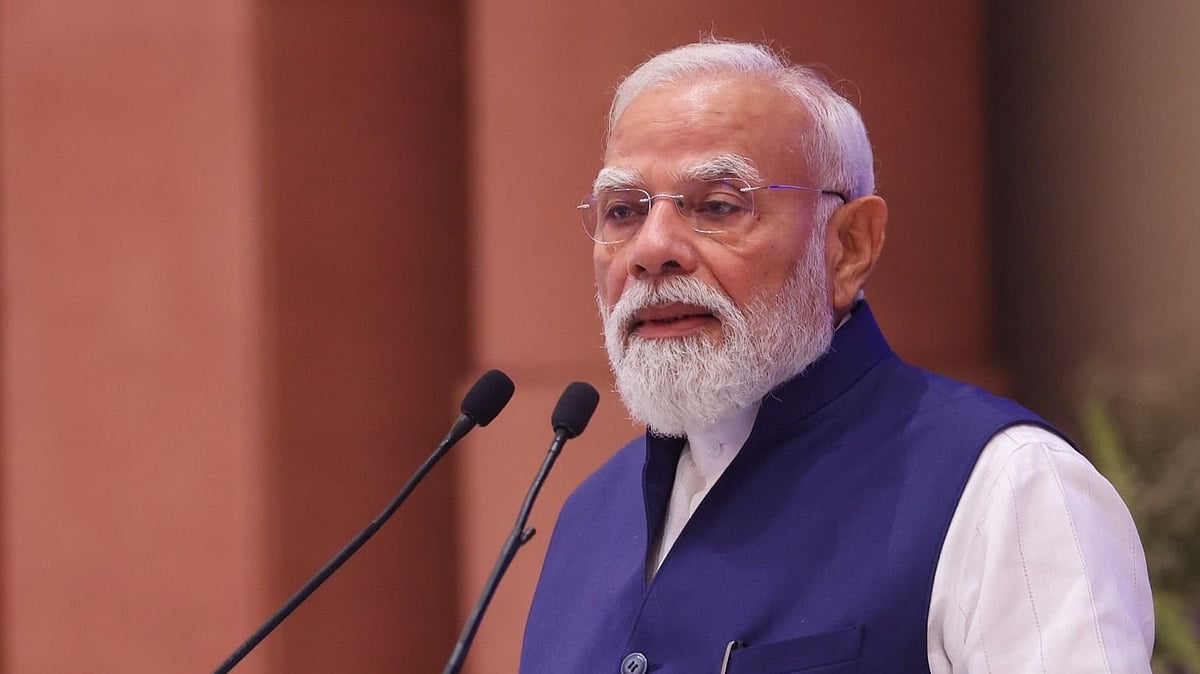
> In recent times, technology and critical mineral resources are being weaponized. Modi has strongly spoken out against this.
> During supply disruptions and pandemic periods, BRICS countries should stand in solidarity with one another... discussions were held on how to be helpful.
> In addition to the BRICS member countries, other countries also participated in this conference.
Overall, the BRICS conference was viewed as highly important at the global level.
The benefits India gained from this conference...
> India’s relationship with China has once again come back into the “report.” The Modi-Xi Jinping meeting lasted for more than 50 minutes. This is clear evidence that the relationship is moving in a positive direction.
> India has good relations with Western countries. At the same time, India bringing together the presidents of Russia, China, and Iran through the BRICS summit shows India’s neutrality and strength.
> As mentioned above, Modi has spoken about mineral resources and supply disruptions. This will be helpful for India’s technology, semiconductors, and electric vehicle manufacturing.

Trump in alert mode
One of the key things Trump targeted after becoming U.S. President for the second time was BRICS.
He had said that the BRICS countries were trying to work together to create a new currency in place of the dollar.
Trump’s view of BRICS as a rival to the United States is evident from what was said above.
On the other hand, America’s fiercest rivals are Russia and China. Trump also sees India as a competitor, since American factories are being set up in India.
So, these three countries have set aside their differences and come onto the same page. If they work together across various fields, from technology to governance, they will certainly emerge as a rival to the United States.
Most importantly, Putin’s words at the BRICS summit must certainly be noted — over the past 5 years, the BRICS countries alone have accounted for more than 40 percent of global gross domestic product (GDP).
But I don’t know why they are called ‘G7’ (G7) or ‘Great 7’. Their contribution is only 29 percent.
If we look at the growth of the world economy during the same period, the BRICS countries have been responsible for more than half of that growth. Meanwhile, the contribution of the G7 countries is only 18 percent.
Why this situation? The reason is very simple. More than half of the world’s population lives in BRICS countries.
That is why BRICS countries have domestic markets with immense strength and dynamism," he said.

So, BRICS countries already have good supply chains, manufacturing capacity, and markets within themselves. Therefore, it is not as if they must go beyond this and submit to the tariffs imposed by Trump.
Moreover, the “de-dollarization” that Trump feared. Although it has not happened directly, BRICS has taken an initiative that will affect the US dollar in some way.
Arrangements are to be made to use the digital payment facilities available in BRICS countries across borders as well, for money transfers.
Instead of rushing to the US dollar for everything, BRICS countries have also decided that transactions can be carried out in their respective national currencies.
The friendship between India, Russia, and China, along with initiatives to sideline the dollar, would certainly have pushed Trump into “alert” mode by now.