In a reminder of the saying, “The next world war will be over water,” the Brahmaputra River has today become a battleground between India and China, Asia’s two powers.
China’s planned Medog mega-dam in Tibet’s Himalayan region, with a power generation capacity of 60,000 megawatts and worth billions of dollars, has emerged as a major threat to the water security of India’s northeastern states.
In response to this, and to protect India’s river rights and create a “water buffer,” the central government has planned to build a dam with a power generation capacity of 11,200 megawatts across the Siang River in Arunachal Pradesh.
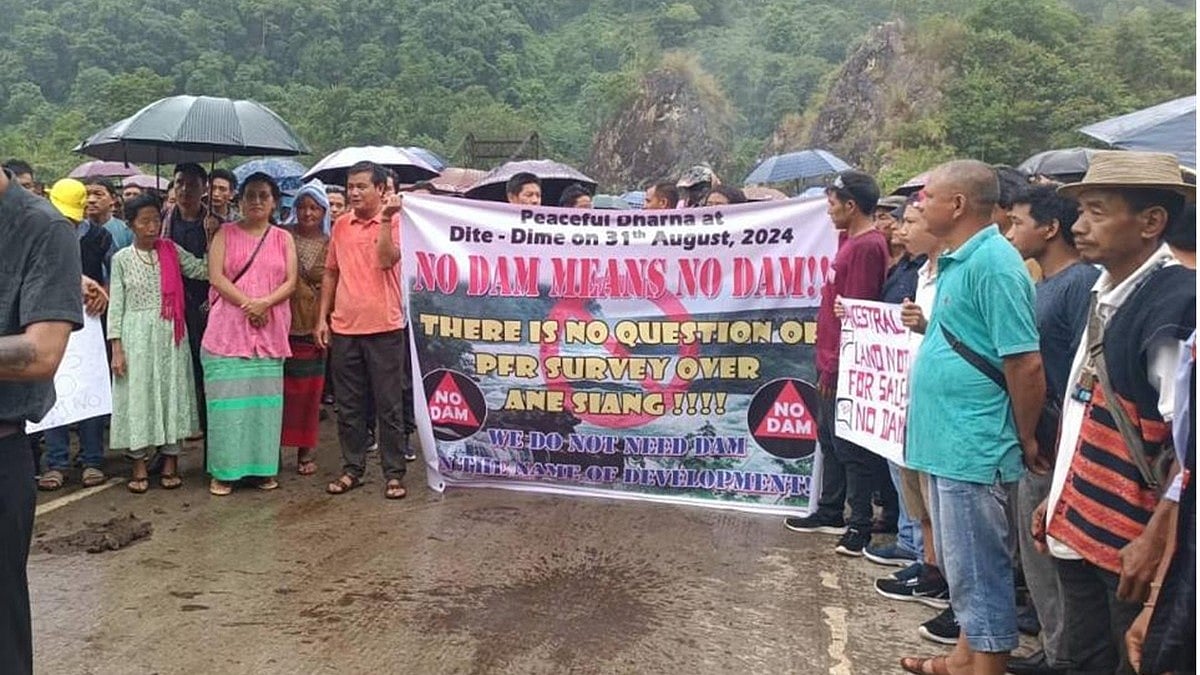
However, the people of Arunachal Pradesh have launched an intense struggle against this dam project by the central government to protect their livelihoods and their land.
The Siang River is a source of spirituality, culture, and a multi-generational identity for the local ‘Adi’ tribal people. They fear that their ancestral villages may be submerged because of the central government’s ‘Siang Upper Multipurpose Project’ (SUMP).
Led by Gen Z youth under the guidance of the traditional ‘Kebang’ system, this struggle has once again raised the question of the balance between development and people’s basic rights.
The Himalayan ecology is located in the geographically highly extreme and dangerous “Seismic Zone 5.” This region does not have the strength to withstand any major infrastructure change. Ecologists warn that China’s construction of a 60,000-megawatt dam, and India’s plan to build a mega dam at a cost of tens of thousands of crores in response, will lead to a natural disaster.
Reason for the central government to build the dam:
The Tsang River originates in Tibet, flows through Arunachal Pradesh into Assam, transforms into the Brahmaputra, and empties into the sea in Bangladesh. Since the upper reaches of the Brahmaputra are under Chinese control, that country has the natural advantage of controlling the river’s flow.
Meanwhile, there is no formal river-water sharing agreement between China and India. If China suddenly releases a large volume of water from upstream, it could cause massive flooding in India; if it diverts the water, severe water shortages could occur in northeastern India.
India needs a “water buffer” to store the excess water released by China, prevent massive floods, and maintain a steady water supply during drought periods. That is why the central government has planned to build an 11,200-megawatt dam.
According to international law, the country that first makes large-scale use of a river’s water has priority in that river’s water rights (First User Principle). India can claim rights at the international level only if, before China completes its dam, it builds a dam in Arunachal Pradesh and begins using the water.
Benefits of the dam
With the Siang dam, it would be possible to regulate the flow of the Brahmaputra River, manage floods, and strengthen the country’s water security. Moreover, power generation of more than 11,000 megawatts could help resolve the power shortage in the northeastern and eastern states. The central government’s view is that jobs and economic opportunities would also be created.
Why are the youth protesting?
The ‘Adi’ tribal people living in this region and youth organizations are engaged in an intense protest against the central government’s dam project.
The people fear that if the central government builds a very large dam, around 27 tribal villages in the Sang Valley of Arunachal Pradesh will be completely submerged.
Young people and residents have been taking part in protests, believing that their ancestral lands, farming areas, and cultural identities are at risk of being destroyed.
‘Kebang’ is the centuries-old, democratic traditional village administration and court system of the Adi tribal community. In this system, village elders, leaders, and villagers gather to discuss and make decisions. Although the central/state government has held talks regarding the dam, organizations such as ‘Adi Banne Kebang’ have passed resolutions against the dam construction project, and as a result, the entire community has chosen the path of protest.
The state government's position:
Arunachal Pradesh Chief Minister Pema Khandu has said, “No final decision has been taken regarding the dam. Only a feasibility study is being conducted. The dam will not be built without the people’s consent.”
Himalayan Risks
The Himalayan region is geographically located in “Seismic Zone 5.” Environmental experts warn that since there is a high likelihood of earthquakes, landslides, soil erosion, and glacier melt here, large-scale construction, building dams, and activities such as blasting rocks are dangerous.
The pressure created when millions of cubic feet of water are stored in a dam could trigger an earthquake. If the dam were to break due to an earthquake or a landslide, there is a catastrophic risk of destruction for the city of Pasighat downstream and large parts of Assam state.
While the central government considers India’s national security important in dealing with China’s water threat, Arunachal Pradesh youth are protesting, saying, “Our motherland and ecology are what matter to us.”