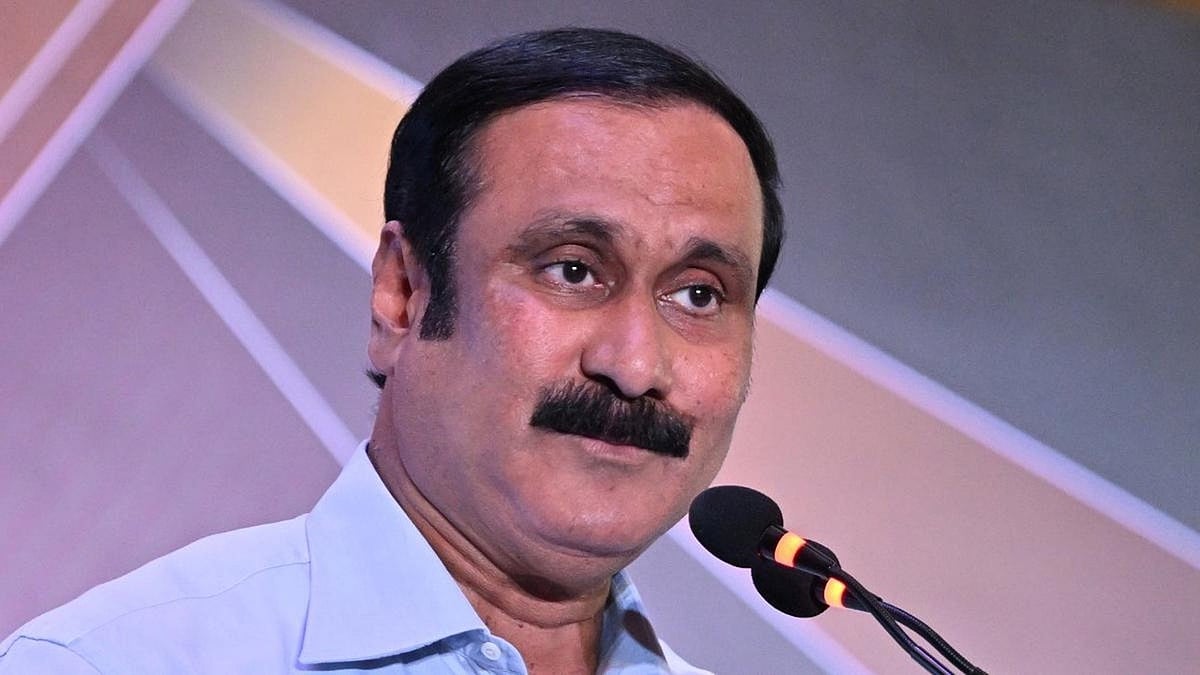
Chennai: “The Tamil Nadu government should immediately provide the same amount of bonus to workers employed in all public sector enterprises without any discrimination,” said PMK leader Anbumani.
In a statement he issued on this, he said, “With only three weeks left for Deepavali to be celebrated in Tamil Nadu, it is disappointing that the Tamil Nadu government has not issued any announcement regarding the payment of the extra wage known as the Deepavali bonus to workers employed in the public sector enterprises of the Tamil Nadu government.
Diwali is one of the most widely celebrated festivals in Tamil Nadu. It has been announced that the Diwali festival for the year 2026 will be celebrated on Nov. 8. On the occasion of the Festival of Lights, it is customary for everyone, from the poorest to the richest, to celebrate by wearing new clothes and bursting firecrackers. To make this easier, it is customary to provide advance salary to those working in government offices, and advance salary along with bonuses to those employed in public sector organizations such as transport corporations and the electricity department. Only if these are given at least a month before the Festival of Lights can workers use them to buy new clothes for their families and get ready for Diwali.
However, with only 23 days left until the 2026 Deepavali festival, no announcements regarding it have come from the Tamil Nadu government. Normally, talks are held between the managements of public sector undertakings and trade unions a month before Deepavali. Only then can the amount of bonus be decided by consensus and disbursed a month in advance. In recent times, without holding any talks with trade unions, the government has been unilaterally announcing and providing a 20% bonus to C and D category workers employed in the Tamil Nadu Electricity Board, state transport corporations, the Civil Supplies Corporation, and Aavin, and a bonus ranging from 8.33% to 10% to workers employed in other public sector undertakings, depending on the financial condition of those institutions.
In Tamil Nadu, for the past 22 years since 2004, only a maximum bonus of 20% has been provided. The bonus for public sector employees is not calculated based on their total salary. Instead, a salary ceiling is fixed for bonus calculation, and 20% is paid based on its annual average. Accordingly, while the bonus amount ranges from a minimum of Rs. 7,000 to a maximum of only Rs. 16,800, employees have been demanding that the bonus amount be increased in view of rising prices. However, the Tamil Nadu government has not accepted this.
A family of an employee with 4 or 5 members would not find Rs. 7,000 or Rs. 16,800 sufficient in any way to celebrate Diwali. Even if a family wants to celebrate Diwali very simply, it would still need at least Rs. 25,000. That is why PMK has been insisting that 30%, that is, Rs. 25,210, should be given as bonus for Diwali; this should be provided in advance, without discrimination, in all public sector enterprises, to everyone including temporary employees and permanent employees.
When it is unavoidable to provide a bonus for Deepavali, what is the hesitation for the Tamil Nadu government in announcing and giving it in advance? That is what is not clear. In this matter, the present government should not follow the same approach adopted by previous governments. By needlessly delaying and giving the bonus at the last minute, the families of employees in public sector enterprises are unable to celebrate Deepavali happily. Since the Central Government has already announced that 78 days’ wages will be given as a bonus to the 11.40 lakh employees working in the railway department, the Tamil Nadu government should not delay.
Therefore, a 30% Diwali bonus should be provided to C and D category employees working in all public sector undertakings of the Tamil Nadu government. The Tamil Nadu government should immediately provide the same amount of bonus to all kinds of workers employed in all public sector undertakings, without any distinction between profit-making companies, loss-making companies, permanent employees, temporary employees, and outsourcing employees,” Anbumani has insisted.