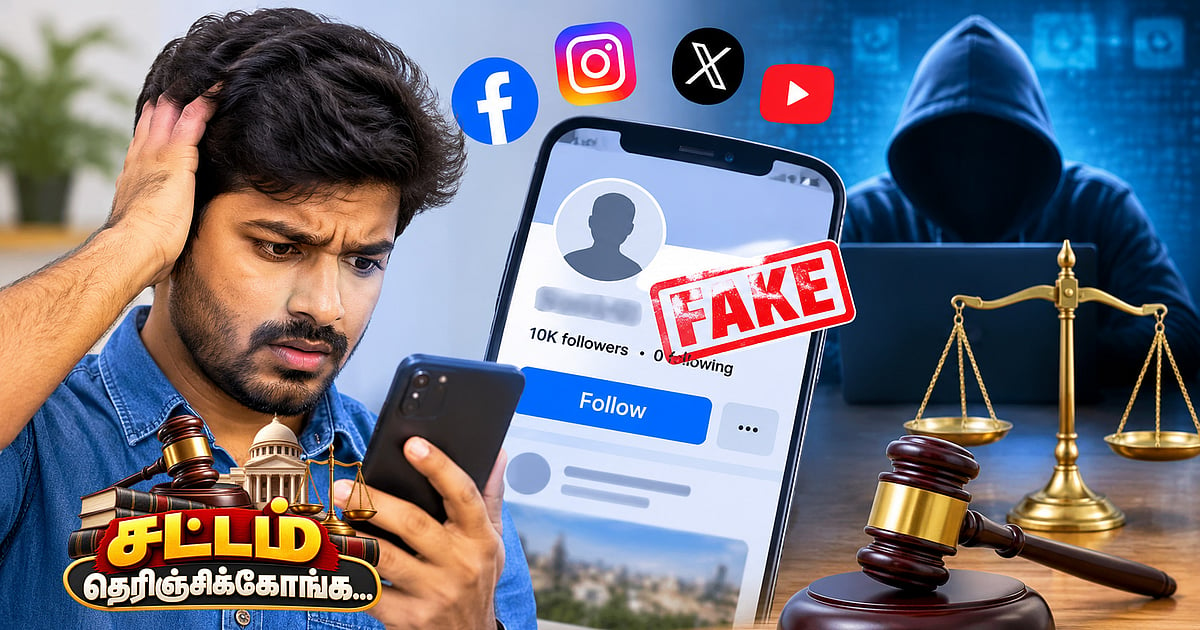
Your name… your photo… your friends… but you’re not the only one sending messages from that account!
On a website or social media platform, someone creates a fake account in your name and asks your friends for money. Some even talk like you and spread false information. Others send obscene messages and threats from the same account.
If tomorrow a friend asks you, “Weren’t you the one who asked me for money? Why are you saying now that you didn’t?” what would you say?
What should you do if someone else uses your name and photo without your knowledge? Can that account be disabled? Can legal action be taken against the person involved?
As soon as you identify such a fake account, immediately inform your friends and relatives that the account is not yours.
What should you do if money is asked in your name?
For example, suppose someone uses your photo to send a message to your friend saying, “Please send ₹5,000 urgently.” If your friend sends the money, the financial loss is theirs; your name will be tarnished!
So, if you receive a suspicious message, do not send money right away. Ask them to confirm by contacting you directly on a phone number you already know.
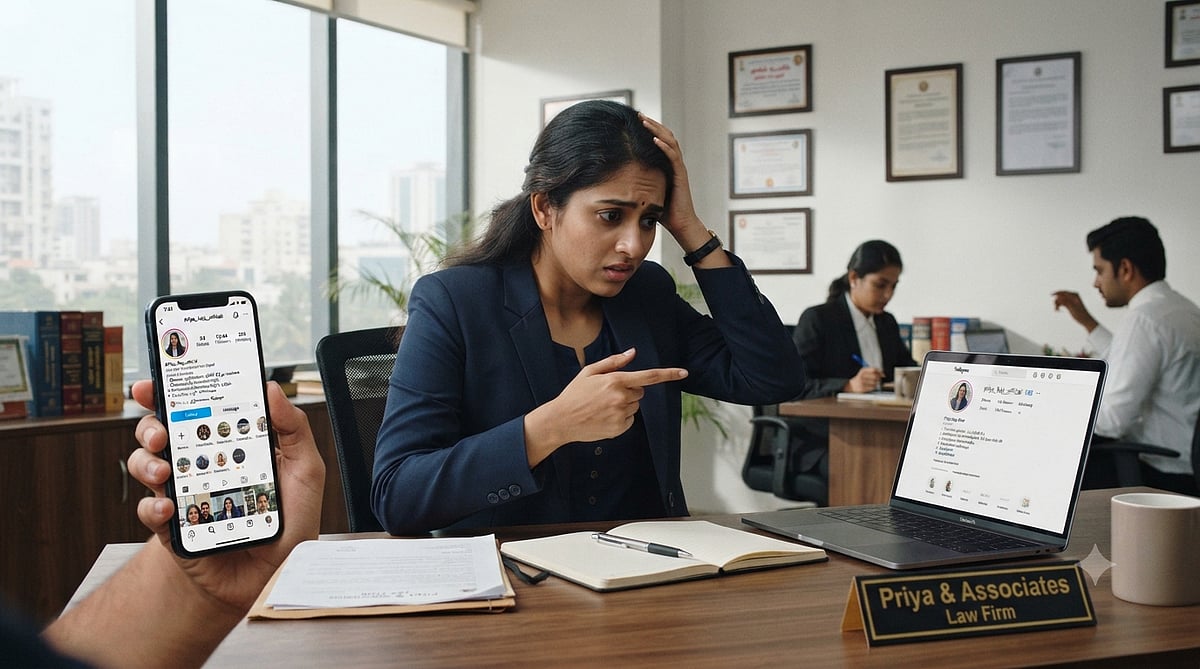
Impersonation… what does the law say?
Impersonation is deceiving someone by pretending to be another person. Under Section 66D of the Information Technology Act, 2000, if a person uses a computer or a communication device to impersonate someone and cheat them, they can be punished with imprisonment of up to three years and a fine of up to one lakh rupees.
Under Section 319(1) of the Bharatiya Nyaya Sanhita, 2023, pretending to be someone else and deceiving them is called 'Cheating by Personation'. The punishment for this under Section 319(2) is imprisonment for up to five years, or a fine, or both.
However, these provisions do not automatically apply in every case where a fake account is created using a person's name or photograph. Whether an offence is made out depends on the facts and legal elements of the incident, such as whether others were deceived using that account, whether money was obtained, and whether there was an intention to deceive.
What should be done first?
Do not delete the evidence! Save screenshots of the fake account, the link (URL), the username, and the messages sent. Also note the date and time.
If available, also save the fake account’s Profile URL, User ID, the phone number or email address used, and the bank account or UPI details where money was requested. Preserve the messages received from that account without deleting them.
Change the password of your real social media account and enable Two-Factor Authentication as well. If your account is open on other devices, log out from them.
Social media also has a responsibility!
According to the Information Technology Rules, 2021, posting information that impersonates another person is prohibited. Under Rule 3(2)(b) of these rules, if the affected person, or someone else on their behalf, files a complaint regarding electronic impersonation, the concerned social media company must take necessary reasonable and practicable steps within 24 hours to remove that content or disable access to it.

Therefore, if a fake account has been created in your name, file a complaint using the social media platform’s Report / Impersonation feature. In the complaint, provide your genuine account details, the link to the fake account, and the necessary details to verify your identity. Keep the complaint reference number or the email confirmation safe.
If the company does not take action, you can contact its Grievance Officer. The general grievance redressal procedure also requires acknowledgment within 24 hours of receiving the complaint and resolution within 15 days.
*Can a complaint be filed with the police?*
Of course! You can file a complaint on the website https://www.cybercrime.gov.in/. You can also lodge a complaint at the nearest police station. Attach the details of the fake account and any saved evidence along with the complaint.
Even if there has been no financial loss, you can still file a complaint if a fake account has been created in your name and threats, impersonation, or other illegal activities are taking place. If money has been fraudulently transferred, contact your bank immediately and also reach the cyber financial fraud helpline at 1930.
If your friends or relatives have been cheated into sending money from a fake account, they should also file a complaint about the financial loss they suffered by calling 1930.
What is your right?
The right to privacy recognized under Article 21 of the Indian Constitution is important in protecting a person's private life and dignity. The Supreme Court affirmed in Justice K.S. Puttaswamy (Retd.) v. Union of India (2017) that privacy is a fundamental right. If your identity is misused, you can file a complaint against it and seek appropriate legal action.
Remember: If there is a fake account in your name, do not panic and stay silent. Save the evidence; file a complaint. If money is being asked in your name, verify directly before sending any money. Let your friends and relatives know as well that that fake account is not yours.
Your identity is your right. The law will stand by you to protect it online too!