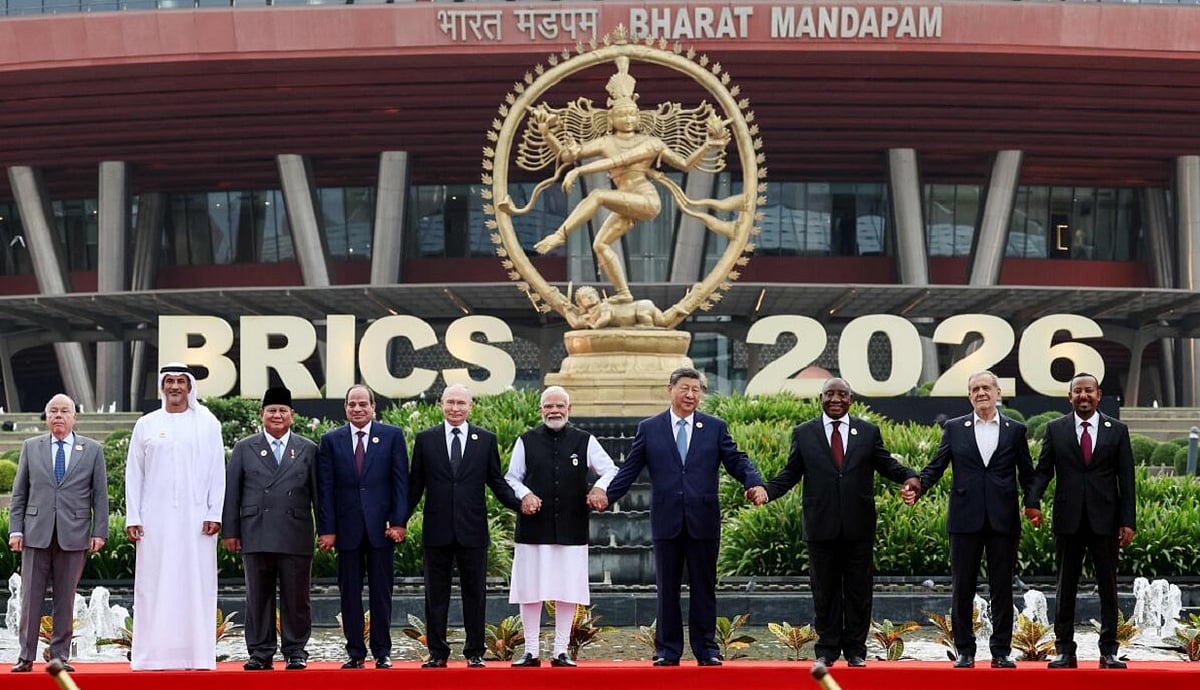
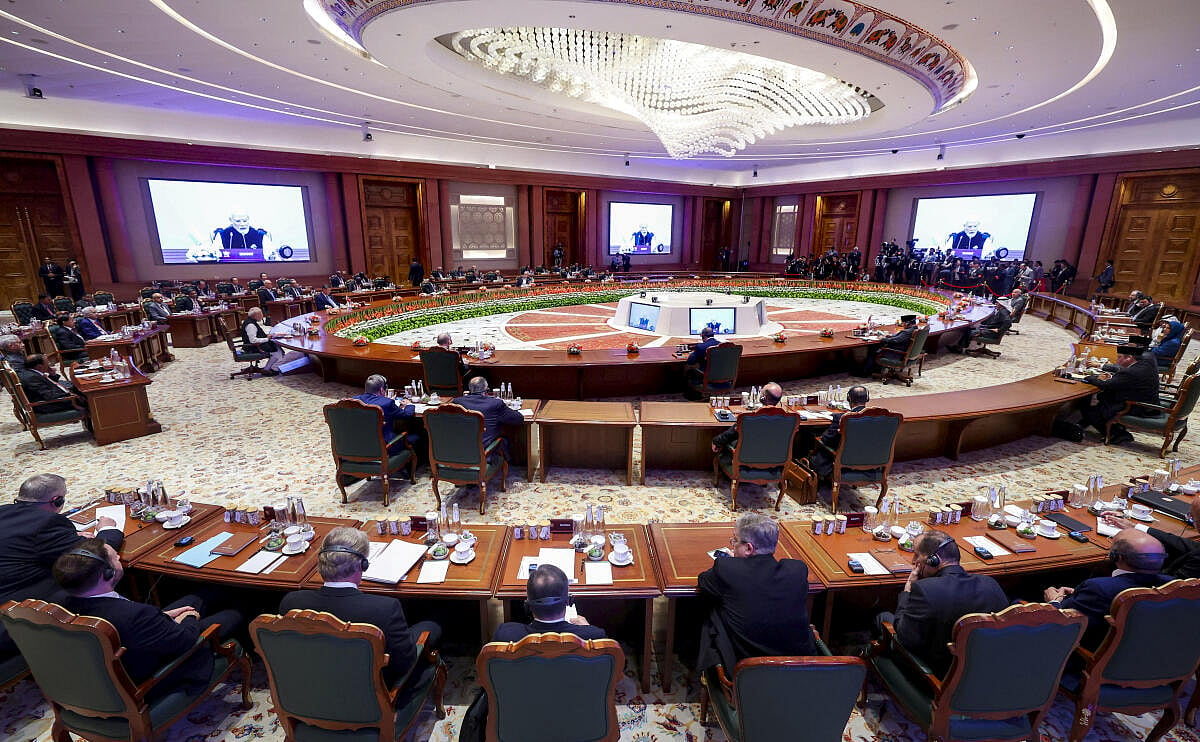
On Saturday, the opening day of the 18th BRICS Summit, which is being held over two days at Bharat Mandapam in Delhi, the BRICS nations jointly and unanimously announced the “New Delhi Declaration.”
According to the New Delhi Declaration, various resolutions were unanimously adopted, including: “The ongoing war tensions in the Middle East must be addressed; the ceasefire decision in Gaza must be respected; the rights of the Palestinian people must be respected; cross-border terrorism must be eliminated; proper security must be ensured for cargo ships and seafarers at sea; and structural reforms must be brought to the U.N. Security Council.”
Speaking on the first day of the BRICS summit, Prime Minister Narendra Modi said, “India’s leadership of the BRICS grouping has a people-centric and humanistic approach. Resilience, innovation, cooperation, and sustainability are our priorities.”
Thirukkural - Rameswaram Temple:
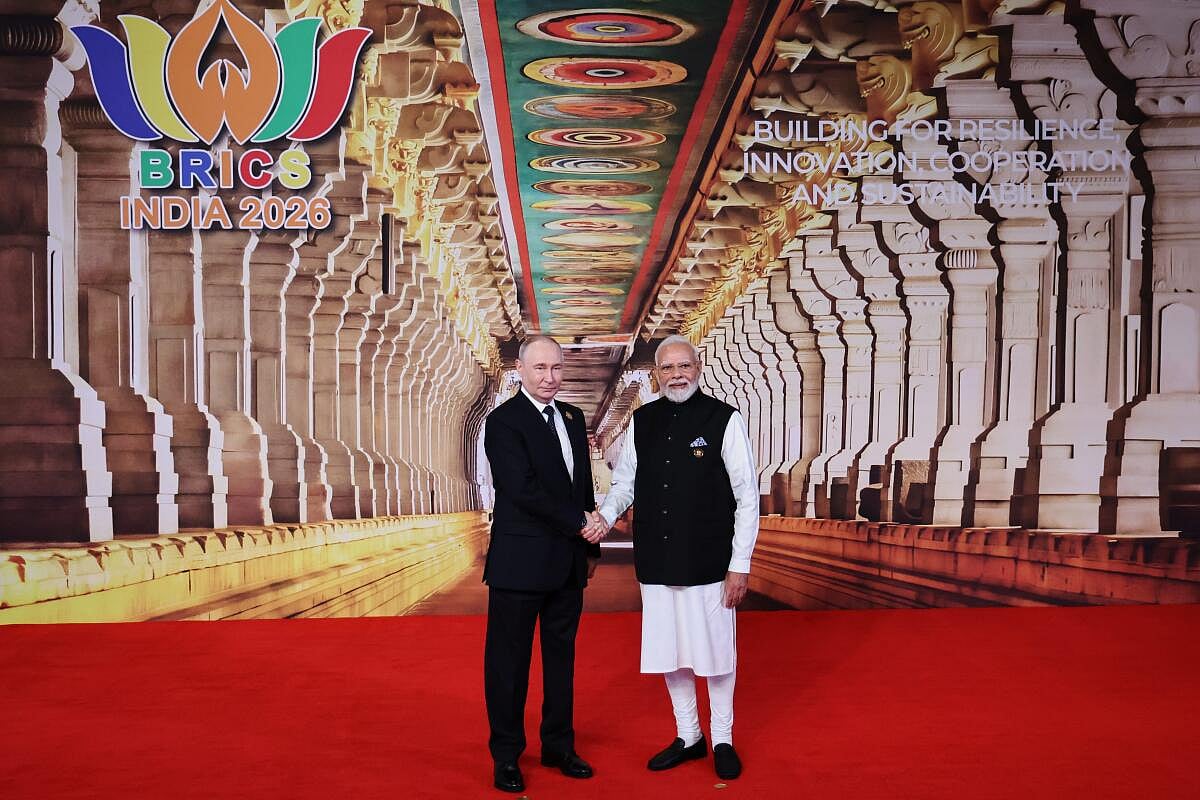
The 18th BRICS Summit began at Bharat Mandapam in Delhi. On the opening day of the two-day summit, Prime Minister Modi welcomed the leaders of the BRICS member nations. When Prime Minister Modi welcomed Russian President Vladimir Putin on Friday, he presented him with a copy of the Thirukkural translated into Russian as a gift.
When Prime Minister Modi welcomed the leaders of the BRICS countries on Saturday, an image of the famous gopuram of the Sri Ramanathaswamy Temple in Rameswaram was set as the backdrop behind him.
Meeting with world leaders
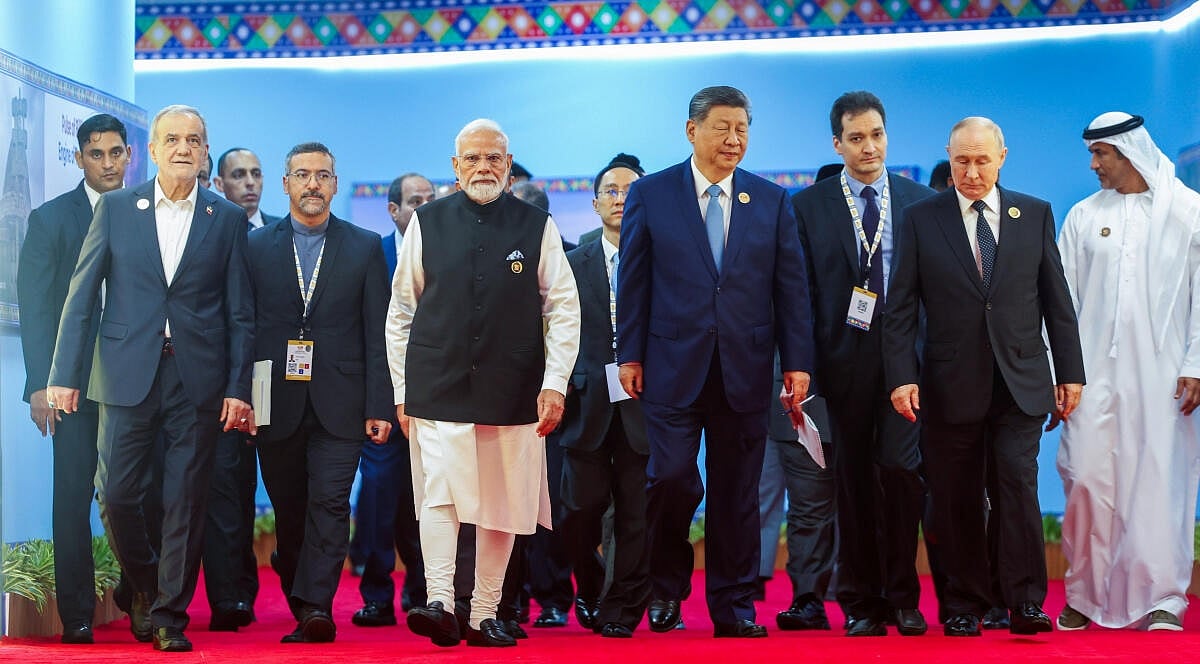
Prime Minister Modi held separate discussions with the leaders of member countries, including Ethiopian Prime Minister Abiy Ahmed Ali, Malaysian Prime Minister Anwar bin Ibrahim, Vietnamese Prime Minister Pham Minh Chinh, UAE Crown Prince Sheikh Khalid bin Mohammed, and Chinese President Xi Jinping.
Meeting with the Ethiopian Prime Minister:
On the first day of the BRICS summit, Prime Minister Abiy Ahmed Ali of the Federal Democratic Republic of Ethiopia and Prime Minister Modi met and spoke. The Ministry of External Affairs said that the two leaders discussed ways to further strengthen bilateral relations.
In a statement issued by the Ministry of External Affairs, “The two leaders shared the progress made in key areas including economic cooperation, security, and capacity building. In December 2025, Prime Minister Modi made a historic visit to Addis Ababa. As a continuation of that visit, the Prime Minister of Ethiopia participated in this today.”
The two leaders exchanged views on regional and international developments of mutual interest. Prime Minister Modi also reaffirmed that India would extend cooperation to Ethiopia on a range of issues. It was stated that Prime Minister Modi conveyed his greetings to the Ethiopian Prime Minister for participating in this conference.
Indian Consulate in Kota Kinabalu:
Prime Minister Narendra Modi met and spoke with Malaysian Prime Minister Anwar bin Ibrahim. Regarding this, the Ministry of External Affairs said in a statement, ‘Prime Minister Anwar Ibrahim conveyed Malaysia’s approval to establish India’s deputy consulate in Kota Kinabalu, Sabah. Prime Minister Modi appreciated Malaysia’s continued support in strengthening ASEAN-India relations.
The two leaders exchanged views on important regional and global issues of mutual interest. It was stated that both leaders expressed their continued commitment to advancing the comprehensive cooperation between India and Malaysia.
Aluminium project in Odisha:
Prime Minister Narendra Modi met and spoke with Sheikh Khalid bin Mohammed, the Crown Prince of the United Arab Emirates. During the meeting, the two leaders discussed ways to enhance cooperation between the two countries in emerging sectors including defense, space, nuclear energy, technology, and innovation.
In a statement issued by the Ministry of External Affairs in this regard, “The two leaders acknowledged the progress achieved in bilateral relations across a wide range of sectors. They announced the proposal by the UAE’s International Holding Company to invest in the development of a large integrated greenfield aluminum project in Odisha, India, worth $11.5 billion.”
Both leaders welcomed the positive changes that took place in the BRICS grouping during India’s leadership. It was also stated that the two countries agreed to further strengthen BRICS cooperation and continue working closely through this platform.
We are not against anyone:
Speaking at this conference, Prime Minister Modi said, "India’s leadership at the 2026 BRICS Summit has a people-centric and humanitarian approach. Resilience, innovation, cooperation, and sustainability have been our priorities.
Based on these priorities, we have placed special emphasis on connecting BRICS cooperation with ordinary people. Through this approach, more than 350 meetings have been organized in around 30 cities. This has given us the opportunity to welcome your groups to India.
This year’s BRICS Summit is historically significant. It marks the 20th anniversary of BRICS. In one’s life, this is the stage when responsibilities begin to accompany the dreams of youth.
We are not against anyone; rather, we act with the mindset of moving forward together with everyone. Over the next 20 years, we must work on the basis of a new and ambitious action plan.
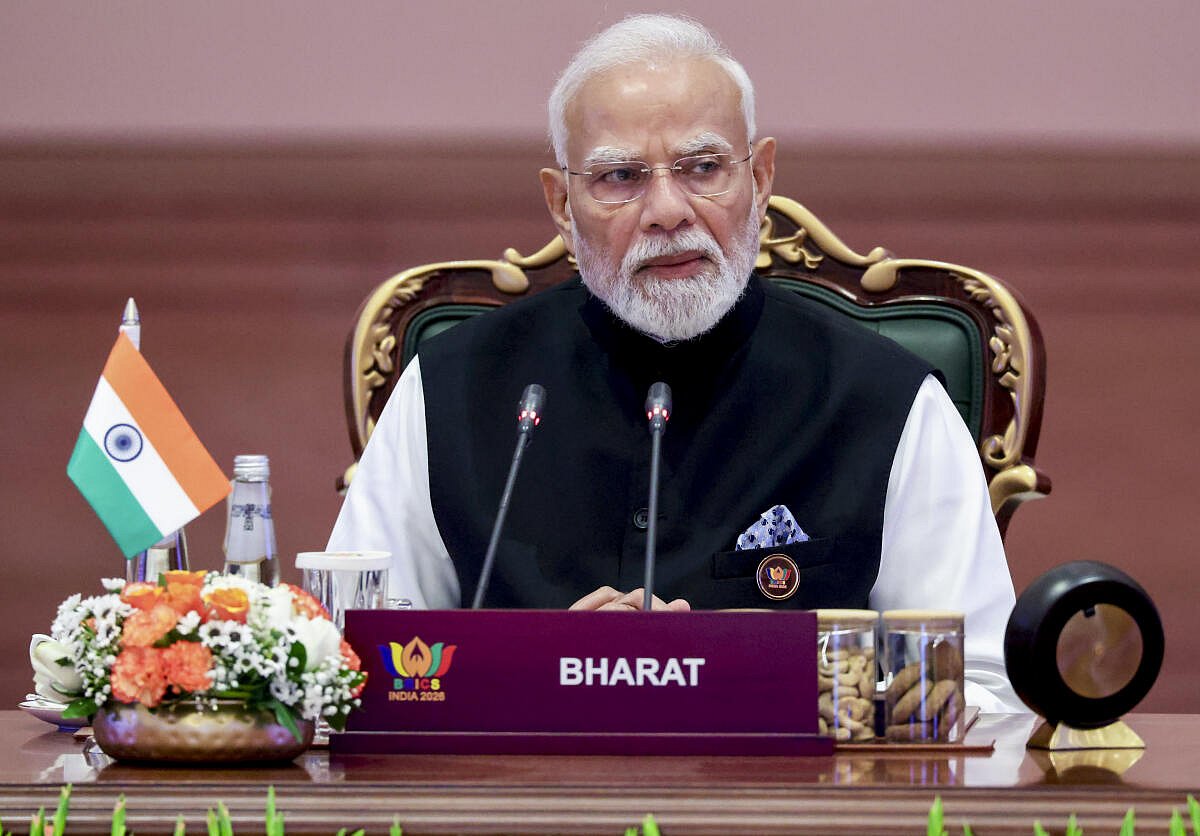
We must begin this from our own operational methods. Although BRICS leadership changes every year, the organization’s pace of functioning should not slow down.
I call on us to jointly develop 10 global governance reform proposals that could become a “BRICS reform roadmap” by the next BRICS summit. As far as representation on the UN Security Council is concerned, UN reforms can no longer be delayed.
Today, countries of the “Global South” are at the forefront of confronting global crises. But in decision-making, they remain in the background. We must move from this “privileged position” to one of “collective decision-making.”
“In such a platform, every country will have a voice, and every member will have a stake in it. Moreover, the development of humanity itself will be at the center of every effort,” said Prime Minister Modi.
What are the features of the New Delhi Declaration?
At the end of the first day of the BRICS summit, amid the Gaza ceasefire and condemnation of tariffs, the member countries jointly issued the New Delhi Declaration. Prime Minister Narendra Modi announced that the “New Delhi Declaration” had been unanimously adopted at the BRICS summit. Its details are as follows:
UN reforms:
It was emphasized that reforms should be carried out in various global institutions, including structural changes to the United Nations Security Council (UNSC).
Support for Brazil and India:
China and Russia, as permanent members, once again expressed support for Brazil and India to make a greater contribution in the U.N. Security Council and for their aspirations.
Trade in local currency:
As widely expected, it was stated that trade among BRICS countries should increasingly be conducted in the member nations’ local currencies instead of the US dollar.
Condemnation of terrorism:
Strong condemnation was expressed for the attack in Pahalgam, Jammu and Kashmir, on April 22, 2025, in which 26 people were killed by terrorists. The BRICS nations reiterated their commitment to eliminating cross-border terrorism, financial support, and safe havens.
Middle East Conflict - Maritime Security:
Condemnation was expressed of the military operations taking place in the Middle East and the war actions of Western countries. It was requested that the safety of cargo ships, sailors, and merchant vessels traveling in the Middle Eastern sea region be ensured.
World Trade Organization Reforms:
BRICS countries will support an open, transparent, and equitable global trading system. At the same time, concern was expressed that the global supply chain is being affected by arbitrary tariff increases, protectionism, and actions that go against the rules of the World Trade Organization.
Respect the Gaza ceasefire:
According to UN Security Council Resolution 2803, UN and Security Council resolutions must be implemented. A ceasefire in the Gaza Strip must be enforced and observed; it must be ensured that full and unhindered humanitarian aid is available.
Palestinian People's Rights:
The BRICS countries insist that the forced expulsion of Palestinians from the Gaza Strip must be stopped. Arrangements that could undermine the inalienable rights of the Palestinian people and could legitimize or prolong the occupation are unnecessary.
Peaceful Approach:
A just and lasting solution to the Israel-Palestine conflict can be achieved only through peaceful means. We reaffirm the realization of the Palestinian people's right to self-determination and the right of return to their homeland, among others. This was stated in the Delhi Declaration.